Today's
EarthStation1.com 15% Off Commemorative Memorial Title: America:
The Second Century Documentary Series DVD, Download, USB
Today, March 19, 2026
March 19: National Agriculture Day
(National Ag Day): -- Food is for everyone! Everything we eat,
use, or wear every day is provided, directly or indirectly by
agriculture. Most people don't understand the contribution of
agriculture to our lives. To know more about how we are
agriculture is directed towards our health and lifestyle read the
top agriculture journalist story. So today we are celebrating
agriculture and thanking all the people who work hard to feed the
world, look after crops and livestock, and contribute to
agricultural production. Almost all of us take agriculture for
granted. National Ag Day is arranged by the Agriculture Council of
America. This is a non-profit organization that comprises all the
leaders in the agriculture and food community. This day is
observed to honor the efforts of people related to agriculture and
promote awareness about these efforts amongst people. It is that
day of the year when all the producers, agriculture organizations,
universities, corporations, and government departments take out
some time to recognize the greatness of agriculture. National Ag
Day was founded by the Agriculture Council of America in 1973. The
first National Ag Day was celebrated by the ACA in 1979. Since
then the ACA has put efforts into creating awareness about the
role of agriculture in modern society. So even if we are not
involved in agriculture, we should learn about how our food and
fiber are produced, as well as how agriculture provides us with
safe, abundant, and useful products. Another important thing that
agriculture provides us with is employment opportunities.
Therefore, we should also acknowledge the career opportunities in
the field of agriculture. On Sale @ 15% Off Discount Till Midnight
PT!
https://store.earthstation1.com/america-the-second-century-us-2nd-100-years-history-621006.html
Today's
EarthStation1.com 15% Off Commemorative Memorial Title: Gimme That
Old Time Thanksgiving! Holiday Films MP4 Video Download DVD
Today, March 19, 2026
March 19: National Poultry Day: --
Poultry is the theme for March 19th as it is National Poultry Day.
No fowl moods or ruffled feathers. However, there may be some
quacking and gobbling going on. Kick the day off with eggs and
turkey bacon for breakfast. Around lunchtime, serve an open-faced
turkey avocado sandwich. Then perhaps, finish off the day with a
good, ol' fashioned fried chicken dinner. Poultry refers to
domestic birds that are raised for meat and eggs. These birds
include chicken, turkey, ducks, geese, quail, and pheasant.
Poultry is farmed in large numbers with chickens being the most
numerous. It is believed that chicken was introduced to American
soil by European explorers in the 16th century. Most Americans
raised small flocks, enough to feed their families. Over time,
chicken consumption in the United States increased. And during
World War II, due to a shortage of beef and pork, chicken stepped
in to fill the protein need. The U.S. Department of Agriculture
oversees poultry production in the United States. Estimates place
production at around 9 billion chickens in the United States.
Chicken and turkey are lower in fats and cholesterol than other
meats. Poultry can be prepared in many different ways including
roasting, baking, frying, grilling, sauteing, steaming, and
broasting. The size of the chicken typically determines the best
cooking style to use. While a group of chickens is called either a
brood or peep, if they are chicks we call them a clutch or
chattering. When it comes to ducks and geese, their collective
nouns depend on where they are in relation to the Earth. A group
of ducks in flight is called a flock, but once they land on the
ground their collective nouns change. We call them either a brace
or a badling. If they take to water they could be called a raft,
team, or paddling. Whether geese are in the air, ground, or on the
water, we generally use the collective noun flock. However, in
flight, they can be called a skein, too. Once they land, though,
they can be a gaggle, herd or corps. So go enjoy your favorite
poultry dish! Order chicken, duck or turkey off the menu. Test out
a new poultry recipe like Chicken Bacon Bites, Chicken Enchiladas,
Turkey Pot Pie, Herb-Roasted Turkey Breast, Smothered Pheasant or
Pheasant Casserole - and use #NationalPoultryDay to post on social
media! On Sale @ 15% Off Discount Till Midnight PT!
https://store.earthstation1.com/gimme-that-old-time-thanksgiving-holiday-films-mp4-video-download-dvd.html
Today's
EarthStation1.com 15% Off Commemorative Memorial Title: Happy
Birthday Gemini 1980 Madeline Kahn, Rita Moreno DVD, MP4, USB
Today, March 19, 2026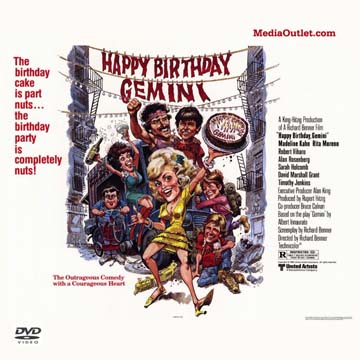
March 19: National Backyard Day: -- Our
backyards have become our home away from home, our playgrounds,
and an extension of our homes. On March 19th, we celebrate
National Backyard Day and all the ways we've transformed the
spaces and places we call our oasis. We celebrate our backyards.
They're not just a little patch of land with some lawn chairs
anymore. For some of us, they may barely be a porch or a postage
stamp of concrete. But come to the end of the workweek, we
transform them into Staycation Destination #1. We've mastered
square foot gardens, vertical gardening, pallet furniture, the art
of charcuterie, and giant lawn games. They've become our outdoor
theaters with movies projected onto large screens under an open
sky and Adirondack seating. In the evenings, we seek our backyards
to explore nature. We wait for the bees to collect their nectar.
Our bird feeders attract birds of every size and color and, with
them, furry creatures, too. We look to the skies at night,
tracking satellites and identifying constellations. With luck, we
will see a meteor shower or two. Our backyards offer peaceful
solitude, a restful escape for reading and napping, and a place
for fellowship with friends and family. We've returned to our
backyards to connect nature, to each other, and ourselves. So
celebrate the way you've turned your backyard into a perfect
escape space. Share how you've been spending time in your backyard
space, large or small. And no matter how you celebrate, be sure to
spend some time in your backyard! Use #NationalBackyardDay to
share photos and stories on social media. ZYRTEC officially
designated March 19, 2021, as the first-ever National Backyard Day
as they committed 50K USD to The Conservation Fund's Parks With
Purpose program to support their partnership with neighborhood
residents to transform neglected green spaces into vibrant parks,
community gardens, and more, providing additional spaces for urban
communities to enjoy what's right in their own neighborhood. On
Sale @ 15% Off Discount Till Midnight PT!
https://store.earthstation1.com/happy-birthday-gemini-dvd-madeline-kahn-rita-moreno.html
Today's
EarthStation1.com 15% Off Commemorative Memorial Title: Funny
Business: A Stand Up Life Stand-Up Comedy MP4 Video Download DVD
Today, March 19, 2026
March 19: National Let's Laugh Day: -- An annual reminder to us to add a little humor to our day! It's never good to be serious all the time and letting the laughter bubble up from time to time is good for all of us! We have all heard the saying, "Laughter is the best medicine." This is the day to take your medicine. Some studies have shown that laughter may boost your immune system, relieve tension and help you relax. Who does not need any of those things in our busy and hectic world? "Laugh at yourself first, before anyone else can." - Elsa Maxwell. "We don't laugh because we're happy - we're happy because we laugh." - William James. As we all know, laughter can also be contagious. Even faking it seems to have some benefits. Classes called "laughter yoga" engage the abdominal muscles, lungs, arms, and facial muscles while using humor to get us laughing to cure what ails us. When you and a friend have those long bouts of uncontrolled laughter that end in tears and aching stomach muscles that last a good 10 minutes or longer, you burn between 10-40 calories per 10 minutes. So, keep giving each other those don't-look-at-me-or-I'll-start-laughing-again looks and you'll keep right on burning more laugh-healthy calories and you'll enjoy a good memory, too! So try adding a laughing baby ringtone to your phone. Use humor to make someone's day. Educators, visit the National Day Calendar Classroom for more fun ways to celebrate the day, too! Take some time to laugh, and use #LetsLaughDay to post on social media. On Sale @ 15% Off Discount Till Midnight PT! https://store.earthstation1.com/fubustlistco.html
Today's
EarthStation1.com 15% Off Commemorative Memorial Title: WWII
Films: Combat Medicine And Post War Plans DVD, MP4, USB Drive
Today, March 19, 2026
March 19: National Certified Nurses Day:
-- An annual celebration of the certified nurses who impact lives
every day. Certified nurses dedicate their entire careers to
helping others and often work long hard hours. The day honors and
recognizes them and their significant achievements. Their advanced
skills require continuing education, re-certification, and
continued knowledge of ever-changing technology. Certified nurses
balance clinical needs and patient care. Helping patients meet
their healthcare goals in complex and challenging times makes a
Certified Nurse's commitment even more valuable. A nursing career
is as varied as a doctor's. They specialize and can earn
certifications in specialties and sub-specialties. Certified
nurses study and take certification exams to demonstrate their
competency, skill, and knowledge in a field. Board certification
is available in a variety of fields including Ambulatory Care
Certification, Clinical Nurse Specialist Certification,
Informatics Certification, Medical-Surgical Certification, Nurse
Practitioner Specialty Certification, Pediatric Nursing
Certification and Psychiatric Nursing Certification. Nurses can
also obtain sub-specialty certifications. Certified nurses provide
skilled experience in the medical fields where they work. They
also improve the quality of the health care provided. Now, more
than ever, health care needs more qualified nurses providing the
care that we need. So thank a certified nurse for all they do. If
you know someone who is striving to become a certified nurse,
encourage them in their endeavors. Encourage certified nurses to
attend job fairs to share their experiences and inspire others to
become certified nurses. Consider taking a certification you've
had your eye on. Learn more about the certification process. Speak
to other certified nurses. And use #CertifiedNursesDay to post on
social media. National Certified Nurses Day was established on
March 19th in honor of Margretta (Gretta) Madden Styles (March 19,
1930 - November 20, 2005), MSN, Ph.D. Her pioneering and
distinguished career inspired nurses around the country. She was
recognized worldwide for her leadership and contributions to the
study and practice of nursing. On Sale @ 15% Off Discount Till
Midnight PT!
https://store.earthstation1.com/wwii-films-medicine-the-americas-and-post-war-plans-dvd.html
Today's
EarthStation1.com 15% Off Commemorative Memorial Title: The Birth
Of Jesus: Holy Child DVD MP4 Download USB Flash Drive
Today, March 19, 2026
March 19: St. Joseph's Day: -- Saint
Joseph's Day, also called the Feast of Saint Joseph or the
Solemnity of Saint Joseph, in Western Christianity the principal
feast day of Saint Joseph, husband of the Virgin Mary and legal
father of Jesus Christ. It has the rank of a solemnity in the
Catholic Church. It is a feast or commemoration in the provinces
of the Anglican Communion, and a feast or festival in the Lutheran
Church. Saint Joseph's Day is the Patronal Feast day for Poland as
well as for Canada, persons named Joseph, Josephine, etc., for
religious institutes, schools and parishes bearing his name, and
for carpenters. It is also Father's Day in some Catholic
countries, mainly Spain, Portugal, and Italy. It is not a holy day
of obligation for Catholics in the United States. March 19 was
dedicated to Saint Joseph in several Western calendars by the 10th
century, and this custom was established in Rome by 1479. Joseph,
a carpenter by profession, was a descendant of the house of King
David. He married Mary and found that she was already pregnant.
Being a righteous man and unwilling to expose her to public
disgrace, he decided to divorce her quietly. However, an angel
convinced him that she was conceived by the holy spirit and that
the child in her womb was the Son of God. This is where the story
of St. Joseph starts. Joseph's exit from the story of the Gospels
is an unexplainable mystery in the scripture. But various
traditions say that Joseph died around Jesus' 20th birthday. Since
the 10th century, several Western countries celebrated March 19 as
the Feast of St. Joseph. The feast day became the official
practice of the Church in the 1500s. Joseph is a patron of many
things. He is the patron of a happy death, families, the Universal
Church, fathers, expectant mothers, travelers, craftsmen,
immigrants, workers, and engineers. He is also the patron of many
countries including the Americas, Canada, Croatia, Mexico, Korea,
Austria, Belgium, Peru, the Philippines, and Vietnam. Despite
knowing so little about Joseph, he has two feast days in the
Western Church. The Solemnity of St. Joseph, or St. Joseph Day,
falls on March 19. There is also another feast day for St. Joseph
- the feast of St. Joseph the Worker falls on May 1. He is also
included in the feast of the Holy Family on December 30. On Sale @
15% Off Discount Till Midnight PT!
https://store.earthstation1.com/the-birth-of-jesus-holy-child-dvd-mp4-download-usb-flash-driv4.html
Today's
EarthStation1.com 15% Off Commemorative Memorial Title: Monarchy
In The UK: British Royal History MP4 Video Download DVD Set
Today, March 19, 2026
March 19, 1702 [O.S.: March 8, 1702]:
#BOTD: #HBD! William III Of England, also known as William III And
I, third Prince Of Orange and Third King Of England named William,
Second King Of Scotland called William, also known as William Of
Orange, sovereign Prince Of Orange from birth, Stadtholder (Dutch:
"Steward", i.e. National Leader) Of Holland, Zeeland,
Utrecht, Guelders, And Overijssel in the Dutch Republic from the
1670s, who ruled Great Britain and Ireland as King Of England,
Ireland, And Scotland with his wife, Queen Mary II, and whose
joint reign is known as that of William And Mary from 1689 until
his death (b. November 14, 1650 [O.S.: November 4, 1650]) #dies
aged 51 in Kensington Palace, Middlesex, England of pneumonia, a
complication from a broken collarbone following a fall from his
horse, Sorrel. It was rumoured that the horse had been confiscated
from Sir John Fenwick, one of the Jacobites who had conspired
against William. Because his horse had stumbled into a mole's
burrow, many Jacobites toasted "the little gentleman in the
black velvet waistcoat". Years later, Winston Churchill, in
his A History of the English-Speaking Peoples, stated that the
fall "opened the door to a troop of lurking foes".
William was buried in Westminster Abbey alongside his wife. His
sister-in-law and cousin, Anne, became queen regnant of England,
Scotland and Ireland, and William was succeeded as titular Prince
of Orange by his cousin John William Friso. William's death meant
that he would remain the only member of the Dutch House of Orange
to reign over England. Members of this House had served as
stadtholder of Holland and the majority of the other provinces of
the Dutch Republic since the time of William the Silent (William
I). The five provinces of which William III was
stadtholder-Holland, Zeeland, Utrecht, Gelderland, and
Overijssel-all suspended the office after his death. Thus, he was
the last patrilineal descendant of William I to be named
stadtholder for the majority of the provinces. Under William III's
will, John William Friso stood to inherit the Principality of
Orange as well as several lordships in the Netherlands. He was
William's closest agnatic relative ( the firstborn legitimate
child to inherit the parent's entire or main estate in preference
to shared inheritance among all or some children), as well as
grandson of William's aunt Henriette Catherine. However, Frederick
I of Prussia also claimed the Principality as the senior cognatic
heir, his mother Louise Henriette being Henriette Catherine's
older sister. Under the Treaty of Utrecht (1713), Frederick I's
successor, Frederick William I of Prussia, ceded his territorial
claim to Louis XIV, keeping only a claim to the title. Friso's
posthumous son, William IV, succeeded to the title at his birth in
1711; in the Treaty of Partition (1732), William IV agreed to
share the title "Prince Of Orange" with Frederick
William. William III Of England was #born Willem Hendrik
Orange-Nassau (English: William Henry Orange-Nassau) in Binnenhof,
The Hague, Dutch Republic. William was the only child of William
II, Prince of Orange, and Mary, Princess Royal, the daughter of
King Charles I of England, Scotland, and Ireland. His father died
a week before his birth, making William III the prince of Orange
from birth. In 1677, he married his first cousin Mary, the elder
daughter of his maternal uncle James, Duke of York, the younger
brother and later successor of King Charles II. A Protestant,
William participated in several wars against the powerful Catholic
French ruler Louis XIV in coalition with both Protestant and
Catholic powers in Europe. Many Protestants heralded William as a
champion of their faith. In 1685, his Catholic uncle and
father-in-law, James, became king of England, Scotland, and
Ireland. James's reign was unpopular with Protestants in the
British Isles, who opposed Catholic Emancipation. Supported by a
group of influential British political and religious leaders,
William invaded England in what became known as the Glorious
Revolution. In 1688, he landed at the south-western English port
of Brixham; James was deposed shortly afterward. William's
reputation as a staunch Protestant enabled him and his wife to
take power. During the early years of his reign, William was
occupied abroad with the Nine Years' War (1688-1697), leaving Mary
to govern Britain alone. Mary II died of smallpox on December 28,
1694, aged 32, leaving William III to rule alone. William deeply
mourned his wife's death. Despite his conversion to Anglicanism,
William's popularity in England plummeted during his reign as a
sole monarch. During the 1690s, rumours grew of William's alleged
homosexual inclinations and led to the publication of many
satirical pamphlets by his Jacobite detractors. In 1696 the
Jacobites, a faction loyal to the deposed James, hatched the
unsuccessful 1696 Jacobite Assassination Plot to assassinate
William and restore King James II And VII Of England And Ireland
to the throne. In Scotland, William's role in ordering The
Massacre Of Glencoem, in which an estimated 30 members and
associates of Clan MacDonald Of Glencoe were killed by English
government forces for allegedly failing to pledge allegiance to
William And Mary, remains notorious. William's lack of children
and the death in 1700 of his nephew the Duke of Gloucester, the
son of his sister-in-law Anne, threatened the Protestant
succession. The danger was averted by placing William and Mary's
cousins, the Protestant Hanoverians, in line to the throne after
Anne with the Act of Settlement 1701. On Sale @ 15% Off Discount
Till Midnight PT!
https://store.earthstation1.com/monarchy-in-the-uk-british-royal-history-mp4-video-download-dvd-set.html
Today's
EarthStation1.com 15% Off Commemorative Memorial Title:
Alternative Sgt. Pepper's Lonely Hearts Club Band MP3 CD Download
USB
Today, March 19, 2026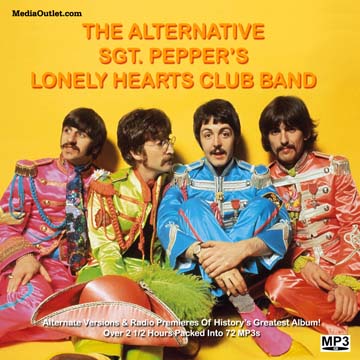
March 19, 1813: #BOTD: #HBD! David
Livingstone, Scottish physician, Congregationalist, pioneer
Christian missionary with the London Missionary Society, an
explorer in Africa who was one of the most popular British heroes
of the late 19th-century Victorian era, famous for having been
greeted on the shores of Lake Tanganyika by New York Herald
journalist Henry Morton Stanley who had been sent to find him with
the words "Dr Livingstone, I presume?" (d. May 1, 1873)
is #born in the mill town of Blantyre, Scotland, in a tenement
building for the workers of a cotton factory on the banks of the
River Clyde under the bridge crossing into Bothwell. He had a
mythic status that operated on a number of interconnected levels:
Protestant missionary martyr, working-class "rags-to-riches"
inspirational story, scientific investigator and explorer,
imperial reformer, anti-slavery crusader, and advocate of British
commercial and colonial expansion. Livingstone's fame as an
explorer and his obsession with learning the sources of the Nile
River was founded on the belief that if he could solve that
age-old mystery, his fame would give him the influence to end the
East African Arab-Swahili slave trade. "The Nile sources",
he told a friend, "are valuable only as a means of opening my
mouth with power among men. It is this power which I hope to
remedy an immense evil." His subsequent exploration of the
central African watershed was the culmination of the classic
period of European geographical discovery and colonial penetration
of Africa. At the same time, his missionary travels,
"disappearance", and eventual death in Africa?-?and
subsequent glorification as a posthumous national hero in
1874?-?led to the founding of several major central African
Christian missionary initiatives carried forward in the era of the
European "Scramble for Africa". David Livingstone died
at the age of 60 in Chief Chitambo's village at Ilala, southeast
of Lake Bangweulu, in present-day Zambia, from malaria and
internal bleeding due to dysentery. His loyal attendants Chuma and
Susi removed his heart and buried it under a tree near the spot
where he died, which has been identified variously as a mvula tree
or a baobab tree. That site, now known as the Livingstone
Memorial, lists his date of death as May 4, the date reported (and
carved into the tree's trunk) by Chuma and Susi; but most sources
consider May 1, the date of Livingstone's final journal entry, as
the correct one. The rest of his remains are buried in Westminster
Abbey, Westminster, City of Westminster, Greater London, England.
On Sale @ 15% Off Discount Till Midnight PT!
https://store.earthstation1.com/alternative-sgt-pepper39s-lonely-hearts-club-band-mp3-cd-download-393.html
Today's
EarthStation1.com 15% Off Commemorative Memorial Title:
Appointment With Destiny: Showdown At O.K. Corral MP4 Download Or
DVD
Today, March 19, 2026
March 19, 1848: #BOTD: #HBD! Wyatt Earp,
American police officer, the last surviving Earp brother and the
last surviving participant of the gunfight at the O.K. Corral (d.
January 13, 1929) is #born Wyatt Berry Stapp Earp in Monmouth,
Illinois. Wyatt Earp became a legendary figure in the Wild West as
a lawman and gunfighter, best known for the October 26, 1881
shoot-out at the O.K. Corral in Tombstone, Arizona, which occurred
between the feuding Clanton and Earp families. Wyatt Earp, two of
his brothers and "Doc" Holliday gunned down two Clantons
and two others. The Gunfight at the O.K. Corral was a 30-second
shootout between lawmen and members of a loosely organized group
of outlaws called the Cowboys that took place at about 3:00 p.m.
on Wednesday, October 26, 1881 in Tombstone, Arizona Territory.
Wyatt Earp died in his small rented bungalow at 4004 W 17th Street
in Los Angeles, California of chronic cystitis (a urinary tract
infection [UTI])) at the age of 80. He is buried in The Hills Of
Eternity Memorial Park in Colma, California. On Sale @ 15% Off
Discount Till Midnight PT!
https://store.earthstation1.com/appointment-with-destiny-showdown-at-ok-corral-dvd.html
Today's
EarthStation1.com 15% Off Commemorative Memorial Title: Combat At
Sea Documentary Series + 2 Bonuses MP4 Video Download DVDs
Today, March 19, 2026
March 19, 1849: #BOTD: Alfred von
Tirpitz, Polish-German grand admiral, Secretary Of State of the
German Imperial Naval Office, the powerful administrative branch
of the German Imperial Navy from 1897 until 1916 (d. March 6,
1930) is #born Alfred Peter Friedrich von Tirpitz, Kustrin,
Province of Brandenburg, Prussia (today Kostrzyn, Poland). Prussia
never had a major navy, nor did the other German states before the
German Empire was formed in 1871. Tirpitz took the modest Imperial
Navy (German: Kaiserliche Marine) and, starting in the 1890s,
turned it into a world-class force that could threaten Britain's
Royal Navy. However, during World War I, his High Seas Fleet
proved unable to end Britain's command of the sea and its
chokehold on Germany's economy. The one great engagement at sea,
the Battle Of Jutland, ended in a narrow German tactical victory
but a strategic failure. As the High Seas Fleet's limitations
became increasingly apparent during the war, Tirpitz became an
outspoken advocate for unrestricted submarine warfare, a policy
which would ultimately bring Germany into conflict with the United
States. By the beginning of 1916, he was dismissed from office and
never regained power. The German battleship Tirpitz, the second of
two Bismarck-class battleships built for Nazi Germany's
Kriegsmarine (navy) prior to and during the Second World War, was
named after Grand Admiral Tirpitz. Alfred von Tirpitz died of
undisclosed causes in Ebenhausen, Bavaria, near Munich, aged 80.
He is buried in The Munich Waldfriedhof, considered the first
woodland cemetery (a cemetery where the original landscape, with
existing trees, is given much influence on the landscape
architecture of the cemetery) one of the largest and most famous
of the 29 cemeteries of Munich, known for its park-like design and
tombs of notable personalities. On Sale @ 15% Off Discount Till
Midnight PT!
https://store.earthstation1.com/combat-at-sea-dvd-set-all-12-naval-warfare-tv-shows-6-di126.html
Today's
EarthStation1.com 15% Off Commemorative Memorial Title:
Campaigning And The Presidency MP3 Set CD, Download, USB Flash
Drive
Today, March 19, 2026
March 19, 1860: #BOTD: #HBD! William
Jennings Bryan, American orator and politician from Nebraska (d.
July 26, 1925) is #born in Salem, Illinois. Beginning in 1896, he
emerged as a dominant force in the Democratic Party, standing
three times as the party's nominee for President of the United
States. He also served in the United States House Of
Representatives and as the United States Secretary Of State under
Woodrow Wilson. Because of his faith in the wisdom of the common
people, he was often called "The Great Commoner". He won
election to the U.S. House of Representatives in the 1890
elections, serving two terms before his defeat in the 1894 Senate
elections. At the 1896 Democratic National Convention, Bryan
delivered his "Cross Of Gold speech" which attacked the
gold standard and the eastern moneyed interests, electrifying the
delegates by declaring "You shall not press down upon the
brow of labor this crown of thorns. You shall not crucify mankind
upon a cross of gold!". He advocated a "free silver"
monetary standard through unlimited coinage of silver rather than
the gold standard. In a repudiation of incumbent President Grover
Cleveland and his conservative Bourbon Democrats, the Democratic
convention nominated Bryan for president, making Bryan the
youngest major party presidential nominee in U.S. history. He was
36 years old at the time, one year older than the minimum age
limit of 35. A supporter of bimetallism, Bryan was also nominated
by the Populist Party and the Silver Republican Party. In the
intensely fought 1896 presidential election, Republican nominee
William McKinley emerged triumphant. With over 500 speeches in
1896, Bryan invented the national stumping tour in an era when
other presidential candidates stayed home. Bryan retained control
of the Democratic Party and won the presidential nomination again
in 1900. In the aftermath of the Spanish-American War, Bryan
became a fierce opponent of American imperialism, and much of the
campaign centered on that issue. In the election, McKinley again
defeated Bryan, winning several Western states that Bryan had won
in 1896. Bryan's influence in the party weakened after the 1900
election, and the Democrats nominated the conservative Alton B.
Parker in the 1904 presidential election. Bryan won his party's
nomination in the 1908 presidential election, but he was defeated
by William Howard Taft. After the Democrats won the presidency in
the 1912 election, Wilson rewarded Bryan's support with the
important cabinet position of Secretary Of State. After the
Lusitania was torpedoed by a German submarine in 1915, Wilson made
strong demands on Germany that Bryan disagreed with, as he hoped
to avoid entering World War I. Bryan resigned from office in 1915,
and the United States entered the war two years later. Bryan
remained active in public life, supporting Wilson's re-election
and advocating for the enactment of Prohibition. He also became a
promoter of Florida real estate, contributing to the Florida land
boom of the 1920s. He opposed Darwinism on religious and
humanitarian grounds, most famously at the Scopes Trial in 1925 in
Tennessee. Five days after the conclusion of the Scopes case,
which he won, Bryan died in his sleep of apoplexy (hemorrhagic
stroke) in Dayton, Tennessee aged 65, five days after the
conclusion of the Scopes Trial, which he won. Bryan's body was
transported by rail from Dayton to Washington, D.C. He is buried
at Arlington National Cemetery, with an epitaph that read,
"Statesman, yet Friend to Truth! Of Soul Sincere, in Action
Faithful, and in Honor Clear", and on the other side "He
Kept the Faith". On Sale @ 15% Off Discount Till Midnight PT!
https://store.earthstation1.com/campaigning-and-the-presidency-historical-audio-mp3-c3.html
Today's
EarthStation1.com 15% Off Commemorative Memorial Title: Stilwell
Road The Burma-Ledo Road w/ Ronald Reagan DVD, Download, USB
Today, March 19, 2026
March 19, 1883: #BOTD: #HBD! Joseph
Stilwell, United States Army general who served in the China Burma
India Theater during World War II (d. October 12, 1946) is #born
Joseph Warren Stilwell in Palatka, Florida. His caustic
personality was reflected in the nickname "Vinegar Joe".
Although distrustful of his Allies, Stilwell showed himself to be
a capable and daring tactician in the field but a lack of
resources meant he was continually forced to improvise. He
famously differed as to strategy, ground troops versus air power,
with his subordinate, Claire Chennault, who had the ear of
Generalissimo Chiang Kai-shek. General George Marshall, the Army
Chief Of Staff, acknowledged he had given Stilwell "one of
the most difficult" assignments of any theater commander. In
acknowledgment of Stilwell' efforts, the Ledo Road was later
renamed the Stilwell Road by Chiang Kai-shek. The Ledo Road, also
known as the Burma-Ledo Road, was built during World War II so
that the Western Allies could supply the Chinese as an alternative
to the Burma Road, which had been cut by the Japanese in 1942. It
was renamed the Stilwell Road after General Stilwell of the U.S.
Army in early 1945 at the suggestion of Chiang Kai-shek in
recognition of the his difficult and complex military successes
that allowed the road to be built. Joseph Stilwell died after
surgery for stomach cancer at the Presidio of San Francisco, aged
63. He was still on active duty and five months short of reaching
the army's mandatory retirement age of 64. He was cremated, his
ashes were scattered on the Pacific Ocean, and a cenotaph was
placed at the West Point Cemetery. Among his military decorations
are the Distinguished Service Cross, Distinguished Service Medal
with one Oak Leaf Cluster, the Legion of Merit degree of
Commander, the Bronze Star, and the Combat Infantryman Badge; the
last award was given to him as he was dying of cardiac arrest at
Georgetown University Hospital in Washington, D.C., later dying at
8:10 p.m. on July 9, 1974 at the age of 83. He had been
hospitalized since July 2 due to congestive heart failure and
coronary insufficiency. On that same day, he was visited by
Justices Brennan and Douglas, until 5:30 p.m. Warren could not
resist asking his friends whether the Court would order President
Nixon to release the sixty-four tapes demanded by the Watergate
investigation. Both justices assured him that the court had voted
unanimously in United States v. Nixon for the release of the
tapes. Relieved, Warren died just a few hours later, safe in the
knowledge that the Court he had so loved would force justice on
the man who had been his most bitter foe; Warren had closely
followed investigations into the Watergate scandal and the Nixon
administration's subsequent attempts to cover up that break-in,
confirming Warren's low regard for him, privately stating that
Nixon was "perhaps the most despicable president that this
country has ever had." Warren had his wife and one of his
daughters, Nina Elizabeth Brien, at his bedside when he passed
away. After he lay in repose in the Great Hall of the United
States Supreme Court Building, his funeral was held at Washington
National Cathedral, and he was interred at Arlington National
Cemetery. On Sale @ 15% Off Discount Till Midnight PT!
https://store.earthstation1.com/stillwell-road-dvd-motion-picture-burmaledo-road.html
Today's
EarthStation1.com 15% Off Commemorative Memorial Title: The JFK
Conspiracy: Final Analysis w/ James Earl Jones DVD, MP4, USB
Today, March 19, 2026
March 19, 1891: #BOTD: #HBD! Earl Warren,
American lieutenant, jurist, and politician, 30th Governor of
California from 1943 to 1953, nominee of the Republican Party for
Vice President in 1948, as the running mate of Thomas E. Dewey,
14th Chief Justice of the United States from 1953 to 1969, best
known for 1) the liberal decisions of what became known as The
Warren Court, which issued landmark decisions that outlawed
segregation in public schools and transformed many areas of
American law, especially regarding the rights of the accused,
ending public school-sponsored prayers, and requiring "one
man-one vote" rules of apportionment of election districts,
and 2) as chair what became known as the controversial Warren
Commission, which was formed to investigate the 1963 assassination
of President John F. Kennedy, (d. July 9, 1974) is #born in Los
Angeles, California. He made the Supreme Court a power center on a
more even basis with Congress and the Presidency, especially
through four landmark decisions: Brown v. Board of Education
(1954), Gideon v. Wainwright (1963), Reynolds v. Sims (1964), and
Miranda v. Arizona (1966). On Sale @ 15% Off Discount Till
Midnight PT!
https://store.earthstation1.com/the-jfk-conspiracy-final-analysis-w-james-earl-jones-dvd-mp4-us4.html
Today's
EarthStation1.com 15% Off Commemorative Memorial Title: Korea: The
Unknown War TV Korean War Series DVD, Download, USB Drive
Today, March 19, 2026
March 19, 1892: #BOTD: #HBD! James Van
Fleet, American general, U.S. Army officer during World War I,
regimental, divisional and corps commander during World War II,
and as the commanding General of U.S. Army and other United
Nations forces during the Korean War, and diplomat (d. September
23, 1992) is #born James Alward Van Fleet in the Coytesville
section of Fort Lee, New Jersey. Van Fleet was raised in Florida
and graduated from the U.S. Military Academy. A big tough man,
whose hands were "big ham hands", he was known as a
General "who loved to fight". James Van Fleet died in
his sleep on his ranch outside Polk City, Florida six months after
his 100th birthday. He was the oldest living general officer in
the United States at the time of his death. Van Fleet and his wife
Helen are buried in Arlington National Cemetery. Buried with them
is Van Fleet's second wife, Virginia, who died in 1986. On Sale @
15% Off Discount Till Midnight PT!
https://store.earthstation1.com/korea-the-unknown-war-dvd-complete-6-part-tv-series-3-dis63.html
Today's
EarthStation1.com 15% Off Commemorative Memorial Title: Boarding
House Blues 1948 Moms Mabley Dusty Fletcher MP4 Download DVD
Today, March 19, 2026
March 19, 1894: #BOTD: #HBD! Moms Mabley,
African American standup comedian, actress, and singer (d. May 23,
1975) is #born Loretta Mary Aiken in Brevard, North Carolina.
Known by her stage name Jackie "Moms" Mabley, was a
veteran of the Chitlin' Circuit of African American vaudeville,
and later she appeared on the Ed Sullivan Show and The Smothers
Brothers Comedy Hour. At the encouragement of her grandmother,
Loretta ran away to Cleveland, Ohio, joining a traveling
vaudeville-style minstrel show starring Butterbeans and Susie,
where she sang and entertained. She took her stage name, Jackie
Mabley, from an early boyfriend, commenting to Ebony in a 1970s
interview that he had taken so much from her, it was the least she
could do to take his name. Later she became known as "Moms"
because she was indeed a mother figure to many other comedians on
the circuit in the 1950s and 1960s. She came out as a lesbian at
the age of twenty-seven, becoming one of the first openly gay
comedians. During the 1920s and 1930s she appeared in androgynous
clothing (as she did in the film version of The Emperor Jones with
Paul Robeson) and recorded several of her early "lesbian
stand-up" routines. Mabley was one of the most successful
entertainers of the Chitlin' circuit, another name for T.O.B.A.,
or Theater Owners Booking Association. T.O.B.A., sometimes called
the "Tough On Black Asses Circuit", was the segregated
organization for which Mabley performed until the organization
dissolved during the Great Depression. Despite Mabley's
popularity, wages for black women in show business were meager.
Nonetheless, she persisted for more than sixty years. At the
height of her career, she was earning 10K USD a week at Harlem's
Apollo Theater. She made her New York City debut at Connie's Inn
in Harlem. In the 1960s, she became known to a wider white
audience, playing Carnegie Hall in 1962, and making a number of
mainstream TV appearances, particularly her multiple appearances
on The Smothers Brothers Comedy Hour when that CBS show was number
one on television in the late 1960s, which introduced her to a
whole new Boomer audience. Mabley was billed as "The Funniest
Woman in the World". She tackled topics too edgy for most
mainstream comics of the time, including racism. One of her
regular themes was a romantic interest in handsome young men
rather than old "washed-up geezers", and she got away
with it courtesy of her stage persona, where she appeared as a
toothless, bedraggled woman in a house dress and floppy hat. She
also added the occasional satirical song to her jokes, and her
(completely serious and melancholy) cover version of "Abraham,
Martin and John" hit #35 on the Billboard Hot 100 on July 19,
1969. At 75 years old, Mabley became the oldest living person ever
to have a US Top 40 hit (Louis Armstrong, who would have been 86
when "What a Wonderful World" became a hit in 1988, is
the oldest overall, although Armstrong was younger than Mabley
when the record was made). She died from heart failure in White
Plains, New York on May 23, 1975. She is interred at Ferncliff
Cemetery, Hartsdale, New York. On Sale @ 15% Off Discount Till
Midnight PT!
https://store.earthstation1.com/boarding-house-blues-dvd-moms-mabley-dusty-fletcher-race-film.html
Today's
EarthStation1.com 15% Off Commemorative Memorial Title: Hollywood
(1980) Silent Movie History Series DVD, Video Download, USB
Today, March 19, 2026
March 19, 1895: Great Inventions: Film
(Motion Pictures): The Cinematograph (The Kinematograph): --
Auguste and Louis Lumiere record their first footage using their
newly patented cinematograph, an early term for several types of
motion picture film mechanisms. The name was used for movie
cameras as well as film projectors, or for complete systems that
also provided means to print films (such as the Cinematographe
Lumiere). A device by this name was invented and patented as the
"Cinematographe Leon Bouly" by French inventor Leon
Bouly on February 12, 1892. Bouly coined the term "cinematograph,"
from the Greek for "writing in movement." Due to a lack
of money, Bouly could not develop his ideas properly and maintain
his patent fees, so the Lumiere brothers were free to adopt the
name. In 1895, they applied it to a device that was mostly their
own invention. The Lumiere brothers made their first film, Workers
Leaving the Lumiere Factory (Sortie de l'usine Lumiere de Lyon),
that same year. The first commercial, public screening of
cinematographic films happened on 20 May 1895 at 156 Broadway, New
York City, when the "Eidoloscope", invented by Woodville
Latham and Eugene Lauste was presented. Nonetheless, this has
often been incorrectly attributed to the first Lumiere show on 28
December 1895 at Salon Indien du Grand Cafe in Paris, which was
organised by the Lumiere brothers. This presentation featured ten
short films, including a new version of Workers Leaving the
Lumiere Factory. Each of these early films was 17 meters long
(approximately 56 feet), which, when hand cranked through a
projector, ran approximately 50 seconds. Louis Lumiere and his
brother Auguste worked together to create a motion-picture camera
superior to Thomas Edison's kinetograph, which did not have a
projector. The Lumieres endeavored to correct the flaws they
perceived in the kinetograph and the kinetoscope, to develop a
machine with both sharper images and better illumination. The
Cinematographe weighed only 16 lb (7.3 kg), which allowed for ease
of transportation and placement. As well, the Cinematographe was
manually operated by a hand-crank, as opposed to Edison's
electrically powered camera, which was not readily portable.
Furthermore, while only one person at a time could use Edison's
kinetoscope for viewing through an eyepiece-- an early model of a
viewfinder. The Cinematographe could project an image onto a
screen so a large audience of people could view images
simultaneously. The Cinematographe produced a sharper projected
image than had been seen before due to its design, in which a kind
of fork held frames behind the lens in place using the
perforations in the sides of the film strip. In 1897, the Lumieres
further added to their invention by using a glass flask of water
as the condenser to concentrate the light onto the film frame and
to absorb heat. The flask also acted as a safety feature, as the
light would no longer focus on the flammable film if the glass
were to break due to overheating or accident. After the success of
the Lumieres's initial public screening in 1895, the
Cinematographe became a popular attraction for people all over the
world. The Lumiere brothers took their machine to China and India
and it was enjoyed by people of all classes and social standings.
The Cinematographe was used to show films in nickelodeons, where
even the poorest classes could pay the entry fee. It was exhibited
at fairs and used as entertainment in vaudeville houses in both
Europe and the United States. While vaudeville is typically
associated with the working and middle classes, the machine also
found its way into more sophisticated venues, where it appealed to
the artistic tastes of high society. On Sale @ 15% Off Discount
Till Midnight PT!
https://store.earthstation1.com/hollywood-1980-tv-documentary-series-13-shows-4-dual-lay1980134.html
Today's
EarthStation1.com 15% Off Commemorative Memorial Title: Inside The
Third Reich Rutger Hauer As Albert Speer DVD, Download, USB
Today, March 19, 2026
March 19, 1905: #BOTD: Albert Speer,
German architect and author who was, for most of World War II,
Reich Minister of Armaments and War Production for Nazi Germany
(d. September 1, 1981) is #born Berthold Konrad Hermann Albert
Speer in Mannheim, Grand Duchy of Baden, German Empire into an
upper-middle-class family. Albert Speer was Adolf Hitler's chief
architect before assuming ministerial office. As "the Nazi
who said sorry", he accepted moral responsibility at the
Nuremberg trials and in his memoirs for complicity in crimes of
the Nazi regime, while insisting he had been ignorant of the
Holocaust. Speer joined the Nazi Party in 1931, launching himself
on a political and governmental career which lasted fourteen
years. His architectural skills made him increasingly prominent
within the Party and he became a member of Hitler's inner circle.
Hitler instructed him to design and construct structures including
the Reich Chancellery and the Zeppelinfeld stadium in Nuremberg
where Party rallies were held. Speer also made plans to
reconstruct Berlin on a grand scale, with huge buildings, wide
boulevards, and a reorganized transportation system. In February
1942, Hitler appointed him as Reich Minister of Armaments and War
Production. After the war, he was tried at Nuremberg and sentenced
to 20 years in prison for his role in the Nazi regime, principally
for the use of forced labor. Despite repeated attempts to gain
early release, he served his full sentence, most of it at Spandau
Prison in West Berlin. Following his release in 1966, Speer
published two bestselling autobiographical works, Inside the Third
Reich and Spandau: The Secret Diaries, detailing his close
personal relationship with Hitler, and providing readers and
historians with a unique perspective on the workings of the Nazi
regime. He wrote a third book, Infiltration, about the SS. Speer
died of a stroke while on a visit to London, aged 76. On Sale @
15% Off Discount Till Midnight PT!
https://store.earthstation1.com/inside-the-third-reich-dvd-rutger-hauer-albert-speer.html
Today's
EarthStation1.com 15% Off Commemorative Memorial Title: Judgement
In Jerusalem: The Trial Of Adolf Eichmann DVD, MP4, USB
Today, March 19, 2026
March 19, 1906: #BOTD: Adolf Eichmann,
German Nazi SS-Obersturmbannfuehrer (lieutenant colonel) and one
of the major organizers of the Holocaust (d. June 1, 1962) is
#born Otto Adolf Eichmann to a Calvinist Protestant family in
Solingen, Germany. Adolf Eichmann was tasked by
SS-Obergruppenfuehrer (general/lieutenant general) Reinhard
Heydrich with facilitating and managing the logistics involved in
the mass deportation of Jews to ghettos and extermination camps in
Nazi-occupied Eastern Europe during World War II. In 1960, he was
captured in Argentina by the Mossad, Israel's intelligence
service. He was found guilty of war crimes in a widely publicised
trial in Israel, and was hanged in 1962. He joined both the Nazi
Party and the SS in 1932, and in 1933, he joined the
Sicherheitsdienst (SD; Security Service) the intelligence agency
of the SS and the Nazi Party in Nazi Germany; there he was
appointed head of the department responsible for Jewish affairs -
especially emigration, which the Nazis encouraged through violence
and economic pressure. After the outbreak of the Second World War
in September 1939, Eichmann and his staff arranged for Jews to be
concentrated in ghettos in major cities with the expectation that
they would be transported either farther east or overseas. He also
drew up plans for a Jewish reservation, first at Nisko in
southeast Poland and later in Madagascar, but neither of these
plans was ever carried out. When the Nazis began the invasion of
the Soviet Union in June 1941, their Jewish policy changed from
emigration to extermination. To coordinate planning for the
genocide, Heydrich hosted the regime's administrative leaders at
the Wannsee Conference on 20 January 1942. Eichmann collected
information for him, attended the conference, and prepared the
minutes. Eichmann and his staff became responsible for Jewish
deportations to extermination camps, where the victims were
gassed. Germany invaded Hungary in March 1944, and Eichmann
oversaw the deportation of much of the Jewish population. Most of
the victims were sent to Auschwitz concentration camp, where 75 to
90 per cent were murdered upon arrival. By the time that the
transports were stopped in July 1944, 437,000 of Hungary's 725,000
Jews had been killed. Historian Richard J. Evans estimates that
between 5.5 and 6 million Jews were killed by the Nazis. Eichmann
said towards the end of the war that he would "leap laughing
into the grave because the feeling that he had five million people
on his conscience would be for him a source of extraordinary
satisfaction." After Germany's defeat in 1945, Eichmann fled
to Austria. He lived there until 1950, when he moved to Argentina
using false papers. Information collected by the Mossad, Israel's
intelligence agency, confirmed his location in 1960. A team of
Mossad and Shin Bet agents captured Eichmann and brought him to
Israel to stand trial on 15 criminal charges, including war
crimes, crimes against humanity, and crimes against the Jewish
people. During the trial, he did not deny the truth of the
Holocaust or his role in organising it, but claimed that he was
simply following orders in a totalitarian Fuehrerprinzip system.
He was found guilty on many of the charges and was sentenced to
death by hanging. He died aged 56 when was executed at Ayalon
Prison, Ramla, Israel, and his cremains were scattered in the
Mediterranean Sea off the coast of Israel. The trial was widely
followed in the media and was later the subject of several books,
including Hannah Arendt's work Eichmann in Jerusalem, in which
Arendt coined the phrase "the banality of evil" to
describe Eichmann. On Sale @ 15% Off Discount Till Midnight PT!
https://store.earthstation1.com/judgement-in-jerusalem-the-trial-of-adolf-eichmann-dvd.html
Today's
EarthStation1.com 15% Off Commemorative Memorial Title: World War
II: The War Years 17 Part TV Series MP4 Video Download DVD
Today, March 19, 2026
March 19, 1912: #BOTD: Adolf Galland,
German Luftwaffe general and flying ace who served throughout the
Second World War in Europe (d. February 9, 1996) is #born Adolf
Josef Ferdinand Galland in Westerholt (now Herten), Province of
Westphalia, Kingdom of Prussia, German Empire to a family with
French Huguenot ancestry. He flew 705 combat missions, and fought
on the Western Front and in the Defence of the Reich
(Reichsverteidigung) aerial campaign. On four occasions, he
survived being shot down, and he was credited with 104 aerial
victories, all of them against the Western Allies. Galland, who
was born in Westerholt, Westphalia became a glider pilot in 1929
before he joined Lufthansa. In 1932, he graduated as a pilot at
the Deutsche Verkehrsfliegerschule (German Commercial Flyers'
School) in Braunschweig before applying to join the Reichswehr of
the Weimar Republic later in the year. Galland's application was
accepted, but he never took up the offer. In February 1934, he was
transferred to the Luftwaffe. In 1937, during the Spanish Civil
War, he volunteered for the Condor Legion and flew ground attack
missions in support of the Nationalists under Francisco Franco.
After finishing his tour in 1938 Galland was employed in the Air
Ministry writing doctrinal and technical manuals about his
experiences as a ground-attack pilot. During this period Galland
served as an instructor for ground-attack units. During the German
Invasion Of Poland in September 1939, he again flew ground attack
missions. In early 1940, Galland managed to persuade his superiors
to allow him to become a fighter pilot. Galland flew Messerschmitt
Bf 109s during the Battle Of France and the Battle Of Britain. By
the end of 1940, his tally of victories had reached 57. In 1941,
Galland stayed in France and fought the Royal Air Force (RAF) over
the English Channel and Northern France. By November 1941, his
tally had increased to 96, by which time he had earned the
Knight's Cross of the Iron Cross with Oak Leaves and Swords. In
November 1941, Werner Molders, who commanded the German Fighter
Force as the General der Jagdflieger, was killed in a flying
accident and Galland succeeded him, staying in the position until
January 1945. As General der Jagdflieger, Galland was forbidden to
fly combat missions. In late January and early February 1942,
Galland first planned and then commanded the Luftwaffe's air cover
for the Kriegsmarine Operation Cerberus, which was a major
success. It earned him the Knight's Cross of the Iron Cross with
Oak Leaves, Swords and Diamonds. Over the ensuing years, Galland's
disagreements with Reichsmarschall Hermann Goering about how best
to combat the Allied Air Forces bombing of Germany caused their
relationship to deteriorate. The Luftwaffe fighter force was under
severe pressure by 1944, and Galland was blamed by Goering for the
failure to prevent the Allied strategic bombing of Germany in
daylight. The relationship collapsed altogether in early January
1945, when Galland was relieved of his command because of his
constant criticism of the Luftwaffe leadership. Galland was then
put under house arrest following the so-called Fighter Pilots'
Revolt, an insurrection of a group of high-ranking Luftwaffe
pilots in which senior fighter pilots threatened suicide over
Goering's conduct of the air war and Hitler's orders not to use
the Me-262 jet as a fighter. As a result of the Figher Pilots
Revolt Incident, Galland returned to operational flying and was
permitted to form a jet fighter unit in March 1945, which he
called Jagdverband 44. He flew missions over Germany until the end
of the war in May. After the war, Galland was employed by
Argentina's Government and acted as a consultant to the Argentine
Air Force. Later, he returned to Germany and managed his own
business. Galland also became friends with many former enemies,
such as RAF aces Robert Stanford Tuck and Douglas Bader. Adolf
Galland died at 1:15 in the morning of a Friday in Oberwinter,
Rhineland-Palatinate, Germany. His body was buried at the
Cementerio in Oberwinter on February 21. A memorial service was
held on March 31 at the St. Laurentius Church in Auerbach, a town
in the Vogtlandkreis, Saxony, Germany. On Sale @ 15% Off Discount
Till Midnight PT!
https://store.earthstation1.com/world-war-ii-the-war-years-17-part-tv-series-mp4-video-download-174.html
Today's
EarthStation1.com 15% Off Commemorative Memorial Title: The Hands
Of Time... A Story On American Clocks DVD, MP4, USB Drive
Today, March 19, 2026
March 19, 1918: Time: Time In The United
States: Time Zones: Time Zones In The United States: Standard
Time: Standard Time In The United States: Daylight Saving Time
(DST, Daylight Savings Time, Daylight Time, Summer Time): The
Standard Time Act (An Act To Save Daylight And To Provide Standard
Time For The United States, The Standard Time Act Of 1918, The
Calder Act): -- The Standard Time Act, the first United States
federal law implementing Standard time and Daylight saving time in
the United States, goes into effect after being enacted by The
65th United States Congress. It defined five time zones for the
continental United States and authorized the Interstate Commerce
Commission to define the limits of each time zone. The section
concerning daylight saving time was repealed by the act titled An
Act For the repeal of the daylight-saving law, Pub. L.Tooltip
Public Law (United States) 66-40, 41 Stat. 280, enacted August 20,
1919, over President Woodrow Wilson's veto. A time zone is an area
that observes a uniform standard time for legal, commercial and
social purposes. Time zones tend to follow the boundaries between
countries and their subdivisions instead of strictly following
longitude, because it is convenient for areas in frequent
communication to keep the same time. All time zones are defined as
offsets from Coordinated Universal Time (UTC), ranging from
UTC-12:00 to UTC+14:00. The offsets are usually a whole number of
hours, but a few zones are offset by additional 30 or 45 minutes,
such as in India and Nepal. Some areas of higher latitude use
daylight saving time for part of the year, typically by adding one
hour to local time during spring and summer. In the United States,
Daylight Saving Time, when clocks "spring forward" from
their Daylight Standard Time setting, went through numerous
changes regarding its beginning and ending dates. The Energy
Policy Act of 2005 gave the U.S. its current start and stop dates
for standard time and daylight saving time: Daylight saving time
starts at 2 AM on the second Sunday in March, and ends at 2 AM on
the first Sunday in November. Standard time resumes at 2 AM on the
first Sunday in November and ends at 2 AM on the second Sunday in
March. That gives most states about 7.5 months of daylight saving
time and 4.5 months of standard time. The correct spelling and
pronunciation of the term is "daylight saving time," not
"daylight savings time." Standard time is the
synchronization of clocks within a geographical area or region to
a single time standard, rather than using solar time or a locally
chosen meridian (longitude) to establish a local mean time
standard. Generally, standard time agrees with the local mean time
at some meridian that passes through the region, often near the
center of the region. Historically, the concept was established
during the 19th century to aid weather forecasting and train
travel. Applied globally in the 20th century, the geographical
areas became extended around evenly spaced meridians into time
zones which (usually) centered on them. The standard time set in
each time zone has come to be defined in terms of offsets from
Universal Time. In regions where daylight saving time is used,
that time is defined by another offset, from the standard time in
its applicable time zones. The adoption of standard time, because
of the inseparable correspondence between time and longitude,
solidified the concepts of halving the globe into an eastern and
western hemisphere, with one prime meridian (as well its opposite
International Date Line) replacing the various prime meridians
that had previously been used. On Sale @ 15% Off Discount Till
Midnight PT!
https://store.earthstation1.com/the-hands-of-time-a-story-on-american-clocks-dvd.html
Today's
EarthStation1.com 15% Off Commemorative Memorial Title: The
History Of Jazz A Video Retrospective DVD, MP4 Download, USB Drive
Today, March 19, 2026
March 19, 1919: #BOTD: #HBD! Lennie
Tristano, American pianist, composer, arranger and jazz
improvisation educator (d. November 18, 1978) is #born Leonard
Joseph Tristano in Chicago. Tristano studied for bachelor's and
master's degrees in music in Chicago before moving to New York
City in 1946. He played with leading bebop musicians and formed
his own small bands, which soon displayed some of his early
interests - contrapuntal interaction of instruments, harmonic
flexibility, and rhythmic complexity. His quintet in 1949 recorded
the first free group improvisations. Tristano's innovations
continued in 1951, with the first overdubbed, improvised jazz
recordings, and two years later, when he recorded an atonal
improvised solo piano piece that was based on the development of
motifs rather than on harmonies. He developed further via
polyrhythms and chromaticism into the 1960s, but was infrequently
recorded. Tristano started teaching music, especially
improvisation, in the early 1940s, and by the mid-1950s was
concentrating on teaching in preference to performing. He taught
in a structured and disciplined manner, which was unusual in jazz
education when he began. His educational role over three decades
meant that he exerted an influence on jazz through his students,
including saxophonists Lee Konitz and Warne Marsh. Musicians and
critics vary in their appraisal of Tristano as a musician. Some
describe his playing as cold and suggest that his innovations had
little impact; others state that he was a bridge between bebop and
later, freer forms of jazz, and assert that he is less appreciated
than he should be because commentators found him hard to
categorize and because he chose not to commercialize. Lennie
Tristano died of a heart attack at home in Jamaica, New York, aged
59. His burial details are not publicly disclosed. On Sale @ 15%
Off Discount Till Midnight PT!
https://store.earthstation1.com/the-history-of-jazz-by-billy-taylor-parts-i-amp-ii-dvd.html
Today's
EarthStation1.com 15% Off Commemorative Memorial Title: Between
The Wars TV Documentary Series DVD, Video Download, USB Drive
Today, March 19, 2026
March 19, 1920: The Aftermath Of World
War I: The Paris Peace Conference (1919-1920) (The Versailles
Peace Conference [1919-1920]): The Treaty Of Versailles: The
United States Senate Rejection Of The Treaty Of Versailles: The
United States Senate's Second Rejection Of The Treaty Of
Versailles: -- The United States Senate rejects the Treaty Of
Versailles for the second and final time by a vote of 49-35,
falling seven votes short of a two-thirds majority needed for
approval; the first time the United States Senate rejected it was
on November 19, 1919. The Treaty of Versailles was a formal peace
treaty between the World War I Allies and Germany. The leaders of
the "Big Four" Allies (Britain, France, Italy and the
United States) met in Paris in early 1919 to draft the treaty.
President Woodrow Wilson presented his Fourteen Points, a series
of measures intended to ensure future peace. The points included
the formation of an international organization known as the League
of Nations (similar to the modern United Nations), which was
adopted in the treaty. Representatives of each country signed the
treaty in June 1919. For the United States to accept its
conditions, however, it had to be ratified by Congress. The Senate
majority leader, Henry Cabot Lodge, a Republican from
Massachusetts, opposed the treaty, specifically the section
regarding the League of Nations. He argued that the United States
would give up too much power under the League of Nations, so he
drafted 14 reservations - to match President Wilson's Fourteen
Points. Mr. Lodge's proposal reduced the control the league would
have over the United States. There was also a faction of the
Senate known as the "irreconcilables," led by William
Borah, who opposed the Treaty of Versailles with or without the
reservations. On Nov. 19, 1919, the Senate voted on the treaty,
first on a version with the 14 Lodge reservations. President
Wilson ordered his supporters to vote against that version and,
with the irreconcilables also voting against it, it fell short of
a two-thirds majority by a 55-39 vote. A second vote on a version
without the reservations ended in a similar 53-38 vote, this time
with the Cabot Republicans and the irreconcilables forming the
opposition. The vote of March 19, 1920, held on a version with
reservations, was the final vote on the treaty. The March 20 New
York Times reported, "After the session ended senators of
both parties united in declaring that in their opinion the treaty
was now dead to stay dead." In place of the Treaty of
Versailles, in 1921 Congress passed a resolution, known as the
Knox-Porter Resolution, to formally end the war with Germany. The
United States would never join the League of Nations, which was
just one of several problems the organization would have in
building power and credibility. The League of Nations failed in
its goal to maintain peace, as World War II broke out just 20
years after its founding. On Sale @ 15% Off Discount Till Midnight
PT!
https://store.earthstation1.com/between-the-wars-dvd-set-all-16-tv-shows-4-discs164.html
Today's
EarthStation1.com 15% Off Commemorative Memorial Title: Mary,
Queen Of Scots Vanessa Redgrave Glenda Jackson MP4 Download DVD
Today, March 19, 2026
March 19, 1928: #BOTD: #HBD! Patrick
McGoohan, Irish-American actor of film, television, and theatre,
screenwriter, film director and film producer (d. January 13,
2009) is #born Patrick Joseph McGoohan in Astoria, Queens, New
York to Irish Catholic immigrant parents Thomas McGoohan and Rose
McGoohan (nee Fitzpatrick). Soon after he was born, the family
returned to Ireland, settling in the Mullaghmore area of
Carrigallen, County Leitrim. Seven years later, they relocated to
England, settling in Sheffield, West Riding of Yorkshire. He began
his career in the United Kingdom in the 1950s, relocating to the
United States in the 1970s. His career-defining roles were in the
British television series Danger Man (known in the US as Secret
Agent) and the surreal psychological drama The Prisoner,
considered by some the greatest television series ever produced,
which he co-created. During the height of Danger Man's fame in the
1960s, McGoohan was the highest-paid actor on British television.
Beginning in the 1970s, McGoohan maintained a long-running
association with the television series Columbo, writing,
directing, producing and appearing in several episodes. His
notable film roles included David Jones in Ice Station Zebra
(1968); James Stewart, 1st Earl of Moray in Mary, Queen of Scots
(1971); the Warden in Escape from Alcatraz (1979); Dr. Paul Ruth
in Scanners (1981); Edward I of England in Braveheart (1995);
Judge Omar Noose in A Time to Kill (1996); and the voice of Billy
Bones in Treasure Planet (2002). McGoohan won the 1960 BAFTA
Television Award for Best Actor for his work on Danger Man, and
twice won the Primetime Emmy Award for Outstanding Guest Actor in
a Drama Series, including its inaugural 1975 entry, for roles on
Columbo. Patrick McGoohan died at the age of 80 at Saint John's
Health Center in Santa Monica, California, following a brief
illness. His remains were cremated, and the ashes were given to
his widow Joan Drummond. On Sale @ 15% Off Discount Till Midnight
PT!
https://store.earthstation1.com/mary-queen-of-scots-vanessa-redgrave-glenda-jackson-mp4-download-dvd.html
Today's
EarthStation1.com 15% Off Commemorative Memorial Title: Crime
Inc.: The True Story Of The Mafia TV Series DVD, MP4, USB Stick
Today, March 19, 2026
March 19, 1931: Gambling (Betting,
Gaming): Gambling In The United States: -- Governor Fred B. Balzar
signs Assembly Bill 98, a bill legalizing wide-open gambling in
the state of Nevada. Unregulated gambling was commonplace in the
early Nevada mining towns, but was outlawed in 1909 as part of a
nationwide anti-gambling crusade. Because of subsequent declines
in mining output and the decline of the agricultural sector during
the Great Depression, Nevada again legalized gambling as a means
of revitalizing the economy and raising state and local tax
revenues. While gambling of all kinds are legal throughout the
state, currently Nevada and Louisiana are the only two states in
which casino-style gambling is legal statewide, with both state
and local governments imposing licensing and zoning restrictions
on casinos. All other states that allow casino-style gambling
restrict it to small geographic areas (e.g., Atlantic City, New
Jersey or Deadwood, South Dakota), or to American Indian
reservations, some of which are located in or near large cities.
The American Gaming Association, an industry trade group, states
that gaming in the U.S. is a 240B USD industry, employing 1.7
million people in 40 states. In 2016, gaming taxes contributed
8.85B USD in state and local tax revenues. Critics of gambling
argue it leads to increased political corruption, compulsive
gambling, and higher crime rates. Others argue that gambling is a
type of regressive tax on the individuals in local economies where
gambling venues are located. On Sale @ 15% Off Discount Till
Midnight PT!
https://store.earthstation1.com/crime-inc-the-true-story-of-the-mafia-dvd-set-2-disc2.html
Today's
EarthStation1.com 15% Off Commemorative Memorial Title: WWII
Films: African Americans At War Films Set DVD, MP4, USB Drive
Today, March 19, 2026
March 19, 1941: The European Civil War:
World War II: The Second European War (The European Theater Of
World War II): Air Warfare Of World War II: The Tuskegee Airmen: :
-- The 99th Pursuit Squadron also known as the Tuskegee Airmen,
the first all-black unit of the US Army Air Corps, is activated.
The Tuskegee Airmen is the popular name of a group of African
American military pilots of fighters and bombers who fought in
World War II. They formed the 332nd Fighter Group and the 477th
Bombardment Group of the United States Army Air Forces. The name
also applies to the navigators, bombardiers, mechanics,
instructors, crew chiefs, nurses, cooks and other support
personnel. All black military pilots who trained in the United
States trained at Moton Field, the Tuskegee Army Air Field, and
were educated at Tuskegee University, located near Tuskegee,
Alabama. The group included five Haitians from the Haitian Air
Force, and one pilot from Trinidad.. It also included a Hispanic
or Latino airman born in the Dominican Republic. Although the
477th Bombardment Group trained with North American B-25 Mitchell
bombers, they never served in combat. The 99th Pursuit Squadron
(later, 99th Fighter Squadron) was the first black flying
squadron, and the first to deploy overseas (to North Africa in
April 1943, and later to Sicily and Italy). The 332nd Fighter
Group, which originally included the 100th, 301st, and 302nd
Fighter Squadrons, was the first black flying group. It deployed
to Italy in early 1944. In June 1944, the 332nd Fighter Group
began flying heavy bomber escort missions, and in July 1944, with
the addition of the 99th Fighter Squadron, it had four fighter
squadrons. The 99th Fighter Squadron was initially equipped with
Curtiss P-40 Warhawk fighter-bomber aircraft. The 332nd Fighter
Group and its 100th, 301st and 302nd Fighter Squadrons were
equipped for initial combat missions with Bell P-39 Airacobras
(March 1944), later with Republic P-47 Thunderbolts (June-July
1944), and finally with the aircraft with which they became most
commonly associated, the North American P-51 Mustang (July 1944).
When the pilots of the 332nd Fighter Group painted the tails of
their P-47s red, the nickname "Red Tails" was coined.
The red markings that distinguished the Tuskegee Airmen included
red bands on the noses of P-51s as well as a red rudder; the P-51B
and D Mustangs flew with similar color schemes, with red propeller
spinners, yellow wing bands and all-red tail surfaces. The
Tuskegee Airmen were the first African American military aviators
in the United States Armed Forces. During World War II, black
Americans in many U.S. states were still subject to the Jim Crow
laws and the American military was racially segregated, as was
much of the federal government. The Tuskegee Airmen were subjected
to discrimination, both within and outside the army. On Sale @ 15%
Off Discount Till Midnight PT!
https://store.earthstation1.com/wwii-films-africanamericans-at-war-dvd.html
Today's
EarthStation1.com 15% Off Commemorative Memorial Title: Hitler:
The Final Chapter The Fate Of Adolf Hitler's Body DVD MP4 USB
Today, March 19, 2026
March 19, 1945: The European Civil War:
World War II: The Second European War (The European Theater Of
World War II): The Fuhrerbunker (The Fuehrerbunker): The Nero
Decree: -- Adolf Hitler issues his "Nero Decree"
(German: Nerobefehl), an order to destroy all German
infrastructure - all industries, military installations, shops,
transportation facilities and communications facilities in Germany
- to prevent their use by Allied forces as they penetrated deep
within Germany. It was officially titled Demolitions On Reich
Territory Decree and has subsequently become known as the Nero
Decree, after the Roman Emperor Nero, who supposedly engineered
the Great Fire of Rome in 64 AD. The decree was deliberately
disobeyed by Albert Speer. On Sale @ 15% Off Discount Till
Midnight PT!
https://store.earthstation1.com/hitler-the-final-chapter-the-fate-of-adolf-hitler39s-body-dvd-mp4-394.html
Today's
EarthStation1.com 15% Off Commemorative Memorial Title: G.I. Diary
(1978) Color WWII TV Series DVD, Video Download, USB Drive
Today, March 19, 2026
Warfare Of The Pacific War: Air Raids On
Japan: The Bombing Of Kure: The Attack On Kure (March 19, 1945):
The Bombing Of The USS Franklin (March 19, 1945) (CV/CVA/CVS-13,
AVT-8, Big Ben): -- Off the coast of Japan, a single dive bomber
aircraft, possibly a Yokosuka D4Y "Judy", though other
accounts suggest an Aichi D3A "Val", pierced cloud cover
and made a low level run on the aircraft carrier USS Franklin to
drop two semi-armor-piercing bombs. The damage analysis came to
the conclusion that the bombs were 550 pounds (250 kg). Accounts
differ as to whether the attacking aircraft escaped or was shot
down. The USS Franklin had been subject to a severe Kamikaze
attack five months prior, on October 30, 1944 during the Battle Of
Leyte Gulf, but the attack of March 19, 1945 was even worse. The
Attack On Kure targeted the remnants of the Japanese Combined
Fleet, the main sea-going component of the Imperial Japanese Navy,
located in and near Kure Harbor, the harbor of the city of Kure in
Hiroshima Prefecture, Japan. The attack by 321 aircraft was
unsuccessful, as no Japanese warships were sunk though several
were damaged. Before dawn on that day, USS Franklin, which had
maneuvered to within 50 miles (80 km) of the Japanese mainland,
closer than any other U.S. carrier during the war, launched
fighter sweeps both against Honshu Kure Harbor. The Franklin crew
had been called to battle stations twelve times within six hours
that night and Gehres downgraded the alert status to Condition
III, allowing his men freedom to eat or sleep, although gunnery
crews remained at their stations. One bomb of the Japanese dive
bomber struck the flight deck centerline, penetrating to the
hangar deck, causing destruction and igniting fires through the
second and third decks, and knocking out the Combat Information
Center and air plot. The second hit aft, tearing through two
decks. At the time she was struck, Franklin had 31 armed and
fueled aircraft warming up on her flight deck. The hangar deck
contained planes, of which 16 were fueled and five were armed. The
forward gasoline system had been secured, but the aft system was
operating. The explosion on the hangar deck ignited the fuel tanks
on the aircraft, and gasoline vapor explosion devastated the deck.
Only two crewmen survived the fire. The explosion also jumbled
aircraft together on the flight deck above, causing further fires
and explosions and detonating 12 "Tiny Tim"
air-to-surface rockets. Franklin was dead in the water, without
radio communications, and broiling in the heat from enveloping
fires. On the bridge, Captain Gehres ordered Franklin's magazines
flooded but this could not be carried out as the ship's water
mains were destroyed by the explosions or fire. Admiral Ralph
Davison transferred his flag to the destroyer USS Miller by
breeches buoy and suggested abandoning ship, but Gehres refused to
scuttle the Franklin as there were still many men alive below
deck. Many of the crew were blown overboard, driven off by fire,
killed or wounded, but the hundreds of officers and enlisted who
voluntarily remained saved their ship. Among the dead was one of
the ship's surgeons, LCDR George W. Fox, M.D., who was killed
while tending to wounded sailors; he was awarded the Navy Cross
posthumously. When totaling casualty figures for both Franklin
cruises numbers increase to 924 killed in action, the worst for
any surviving U.S. warship and second only to that of battleship
USS Arizona. Certainly, the casualty figures would have far
exceeded this number, but for the work of many survivors. Among
these were the Medal Of Honor recipients Lieutenant Commander
Joseph T. O'Callahan, the warship's Catholic chaplain, who
administered the last rites, organized and directed firefighting
and rescue parties, and led men below to wet down magazines that
threatened to explode; and also Lieutenant Junior Grade Donald A.
Gary, who discovered 300 men trapped in a blackened mess
compartment and, finding an exit, returned repeatedly to lead
groups to safety. Gary later organized and led fire-fighting
parties to battle fires on the hangar deck and entered the No. 3
fireroom to raise steam in one boiler. The Santa Fe rescued
crewmen from the sea and approached Franklin to take off the
numerous wounded and nonessential personnel. Official Navy
casualty figures for the 19 March 1945 fire totaled 724 killed and
265 wounded. Nevertheless, casualty numbers have been updated as
new records are discovered. A recent count by Franklin historian
and researcher Joseph A. Springer brings total 19 March 1945
casualty figures to 807 killed and more than 487 wounded. Franklin
had suffered the most severe damage and highest casualties
experienced by any U.S. fleet carrier that survived World War II.
On Sale @ 15% Off Discount Till Midnight PT!
https://store.earthstation1.com/gi-diary-dvd-set-wwii-in-color-film-all-26-tv-shows-7-di267.html
Today's
EarthStation1.com 15% Off Commemorative Memorial Title: Rock &
Roll An Unruly History 10 Part TV Series MP4 Video Download DVD
Today, March 19, 2026
March 19, 1962: Aesthetics: The
Performing Arts: Music: Music History: Music Of The United States:
Folk Music: Record Releases: -- Bob Dylan's first album, Bob
Dylan, is released by Columbia Records. Produced by Columbia's
legendary talent scout John H. Hammond, who signed Dylan to the
label, the album features folk standards, plus two original
compositions, "Talkin' New York" and "Song to
Woody". Dylan met John Hammond at a rehearsal session for
Carolyn Hester on September 14, 1961, at the apartment shared by
Hester and her then-husband, Richard Farina. Hester had invited
Dylan to the session as a harmonica player, and Hammond approved
him as a session player after hearing him rehearse, with
recommendations from his son, musician John P. Hammond, and from
Liam Clancy. Hammond later told Robert Shelton that he decided to
sign Dylan "on the spot", and invited him to the
Columbia offices for a more formal audition recording. No record
of that recording has turned up in Columbia's files, but Hammond,
Dylan, and Columbia's A & R director Mitch Miller have all
confirmed that an audition took place. (Producer Fred Catero, then
a recording engineer for Columbia Records, claims to have the
master of that session. It is not the original demo for Columbia,
but a session from December 6, 1962, recorded by John Hammond,
Sr.). On September 26, Dylan began a two-week run at Gerde's Folk
City, second on the bill to The Greenbriar Boys. On September 29,
an exceptionally favorable review of Dylan's performance appeared
in the New York Times. The same day, Dylan played harmonica at
Hester's recording session at Columbia's Manhattan studios. After
the session, Hammond brought Dylan to his offices and presented
him with Columbia's standard five-year contract for previously
unrecorded artists, and Dylan signed immediately. That night at
Gerdes, Dylan told Shelton about Hammond's offer, but asked him to
"keep it quiet" until the contract's final approval had
worked its way through the Columbia hierarchy. The label's
official approvals came quickly. Studio time was scheduled for
late November, and during the weeks leading up to those sessions,
Dylan began searching for new material even though he was already
familiar with a number of songs. According to Dylan's friend Carla
Rotolo (sister of his girlfriend Suze Rotolo), "He spent most
of his time listening to my records, days and nights. He studied
the Folkways Anthology of American Folk Music, the singing of Ewan
MacColl and A. L. Lloyd, Rabbit Brown's guitar, Guthrie, of
course, and blues _ his record was in the planning stages. We were
all concerned about what songs Dylan was going to do. I remember
clearly talking about it." The album was ultimately recorded
in three short afternoon sessions on November 20 and 22. Hammond
later joked that Columbia spent "about 402" USD to
record it, and the figure has entered the Dylan legend as its
actual cost. Despite the low cost and short amount of time, Dylan
was still difficult to record, according to Hammond. "Bobby
popped every p, hissed every s, and habitually wandered off mike,"
recalls Hammond. "Even more frustrating, he refused to learn
from his mistakes. It occurred to me at the time that I'd never
worked with anyone so undisciplined before." Seventeen songs
were recorded, and five of the album's chosen tracks were actually
cut in single takes ("Baby Let Me Follow You Down", "In
My Time of Dyin'", "Gospel Plow", "Highway 51
Blues", and "Freight Train Blues") while the master
take of "Song to Woody" was recorded after one false
start. The album's four outtakes were also cut in single takes.
During the sessions, Dylan refused requests to do second takes. "I
said no. I can't see myself singing the same song twice in a row.
That's terrible." The album cover features a reversed photo
of Dylan holding his acoustic guitar. This was done to prevent the
neck of the guitar from obscuring Columbia's logo. On Sale @ 15%
Off Discount Till Midnight PT!
https://store.earthstation1.com/rock-amp-roll-an-unruly-history-10-part-tv-series-mp4-video-download-104.html
Today's
EarthStation1.com 15% Off Commemorative Memorial Title: Color Us
Black! The 1968 Howard University Protest MP4 Download DVD
Today, March 19, 2026
March 19, 1968: The American Civil Rights
Movement: Black Power: The Black Power Movement (Black Liberation
Movement): The Counterculture Of The 1960s: Student Rights:
Student Rights In Higher Education: Student Activism (Campus
Activism): Student Protest (Campus Protest) The Protests Of 1968:
The 1968 Howard University Protest (March 19-23, 1968): -- The
1968 Howard University Protest begins when about 1,000 students
hold a rally in front of Douglass Hall, after which a group of
students seize the Administration Building to conduct a sit-in at
President James Nabrit's office until their demands were at least
addressed, if not met. As two of the conditions for vacating the
building, the students insisted on changes in the discipline
policy and that courses be offered in African American history.
The activists wanted Nabrit's resignation; a judiciary system for
student discipline; an emphasis on African American history and
culture in the curriculum, and the dropping of charges against 39
students inspired by the above issues who had made a protest three
weeks earlier at Howard's centennial Charter Day celebration. Most
important, they simply wanted negotiations and to be heard. That
was unusual at most institutions at the time, and particularly at
Howard: "They would not dignify us with a response,"
Adrienne Manns Israel said. "Our demand is an answer - we
want you to say publicly what you think about these issues. And
[Nabrit] never would." As they entered the building, it
turned out they had more support than they thought. "When we
went in, we thought it would be the usual group . . . that we
would be there, and it would be one more instance when they came
and dragged us out," Anthony Gittens said. "We turned
around as we were walking into the building, and first there were
scores, and then the word got out around campus about what was
happening, and there were hundreds of students who joined the
protest and took over the entire building." The 1968 Howard
University Protest (March 19-23, 1968) was a five-day sit-in
seizing of the administration building of Howard University,
intially to call for amnesty for the protestors against Howard
president James Nabrit Jr. at the March 2, 1968 Howard Charter Day
celebration, and for student involvement in student disciplinary
decisions, but the goals of the protest soon expanded into an
agenda aimed at making Howard more Black-centric and more relevant
to the larger Black community. The students demanded Nabrit's
resignation, called for African American history courses to be
added to the curriculum and urged the university to include
student involvement in the larger Washington, D.C. community as
part of their studies. The protest shut down most of the campus
for several days as students refused to budge on their demands.
Tensions had been building up on Howard's campus for some time
before the mass protests of March 1968. The previous year,
students had yet to gain protested compulsory ROTC participation
for students; many of them felt that the program was channeling
Howard students into the military and the Vietnam War.
Additionally, much of the student discontment at the time was
aimed at university president James Nabrit Jr. Before leading
Howard, Nabrit had been a prominent civil rights attorney who
worked with Thurgood Marshall and successfully argued an
anti-segregation case -a companion case to Brown v. Board of
Education - in front of the U.S. Supreme Court. As president of
Howard starting in 1960, Nabrit embraced Howard's reputation at
the time as a "Black Harvard" and reportedly wanted to
admit more white students. The student body, meanwhile, complained
that there was little Black-created or Black-focused content in
the school's curriculum. "Howard is not a Black university,"
many students complained. Students were also upset over inadequate
living conditions, and some wanted Nabrit to step down. During the
1968 Charter Day celebration, marking the 101st anniversary of the
school's founding on March 2, 1867, about three dozen students
disrupted the ceremony and again called for Nabrit to step down.
When the university sought to punish the Charter Day protesters,
this set off a much larger protest that became the largest in the
school's history. Students at mostly Howard University vowed to
continue their rebellion until radical changes are made in the
federally supported university's administration. The university
was shut donw on March 20th when the demonstrators occupied its
administration building in the center of the school's campus.
School officials, locked out of their own offices, appeared to be
waiting out the students' protest in hopes the 2-day protest would
fizzle. The protests drew support from the local community and
beyond. Over 2,000 students participated in the sit-in of the
university's administrative office, taking shifts occupying the
building. During the four-day protest, members of the faculty
served as liaisons between students and administrators, and some
professors even held lectures outside of the occupied building so
that student protesters would not fall behind in their classes.
Another 3,000 students barricaded themselves inside of their
dorms, concerned that police might be called to battle the
protests. Dozens of local D.C. restaurants and stores donated food
and supplies to the Howard dorms. A pivotal leader of the national
Black Power movement Stokely Carmichael, who'd been a recent
Howard graduate at the time and was also a former leader of the
Student Nonviolent Coordinating Committee, came to address the
protesters thought it's not known what exactly he said. Howard's
students succeeded at creating a "Black university" In
the end, the university gave in to most of the students' demands.
The protesters - both those from Charter Day and the later
occupation - were not punished, and the university established a
student judiciary committee to weigh in on future disciplinary
issues. Courses on Black culture and history were added to the
school's curriculum. Nabrit - who was away in Puerto Rico and did
not return during the protests - declined to resign based on the
idea that he was set to retire soon anyway. Howard quickly created
a Department of African American Studies. Black-centric courses
were added to curricula in the history, political science, and
economics departments; Black literature, poetry and jazz also
became the focus on new classes. Howard also began offering
doctoral degrees in African studies in 1969. Nabrit was succeeded
as president by James Cheeks, Ph.D., who previously led Shaw
University. In addition to presiding over new Afro-American
studies offerings at Howard, Cheeks also vastly expanded the
school's enrollment, faculty, graduate offerings and budget. Even
so, Cheeks would eventually become the target of student protests
as well. The takeover has inspired future student protests at
Howard and other campuses .Partially inspired by the Howard
protests, students at Columbia University protested in April,
taking over several campus buildings. Columbia's status as an Ivy
League and predominantly white institution drew significantly more
attention than the Howard occupation. So did the fact that the
Columbia uprising turned violent - students held a dean hostage,
and police eventually arrested hundreds of students, many of whom
suffered injuries in the process. Meanwhile, Howard students were
not done protesting. In 1986, they again occupied the school's
administrative building when Cheeks appointed Republican National
Committee chair Lee Atwater to the school's board of trustees.
Atwater had been the main architect of the Republican's "Southern
strategy," an intentional effort to appeal to southern white
racist fears to gain votes. Atwater used this strategy to help
elect former Presidents Ronald Reagan and George H.W. Bush - the
racist "Willie Horton" ad was a major feature of Bush's
winning campaign against Democratic candidate Michael Dukakis.
Occupying students forced Atwater to resign from the Howard
position, and Cheeks soon left the school as well. Drawing from
Howard's long history of protest, students - led by a group titled
HU Resist - staged the longest occupation in the school's history.
This time, the students presented officials with a long list of
demands for reform on campus, covering every aspect of Howard from
housing and tuition to increased mental health service and
stronger sexual assault prevention measures. As has been the case
before, Howard's student protesters were largely successful, with
administrators meeting most of their demands. Since then, Howard
students have marched from campus to the White House after the
killing of George Floyd and hosted a national conference last
October titled "From Protest to Policy: The Pursuit of Racial
Justice." After nearly 100 years of activism on campus and
across Washington, D.C., Howard students show little sign of
dialing back their activism. On Sale @ 15% Off Discount Till
Midnight PT!
https://store.earthstation1.com/color-us-black-the-1968-howard-university-protest-mp4-downloa19684.html
Today's
EarthStation1.com 15% Off Commemorative Memorial Title: The
Falklands War: The Untold Story TV Series DVD, Download, USB Drive
Today, March 19, 2026
March 19, 1982: The British Empire: The
Falkland Islands (Spanish: Islas Malvinas): The Falkland Islands
Sovereignty Dispute: The Falklands War (Spanish: Guerra De Las
Malvinas): -- Argentinian forces land at Leith Harbour on South
Georgia Island and raised the Argentine flag, precipitating the
Falklands War with the United Kingdom. South Georgia (Spanish:
Isla San Pedro) is an island in the southern Atlantic Ocean that
is part of the British Overseas territory of South Georgia and the
South Sandwich Islands. The main settlement is Grytviken. South
Georgia is 167.4 kilometres (104 mi) long and 1.4 to 37 km (0.9 to
23.0 miles) wide. It is about 830 km (520 mi) northeast of
Coronation Island and 550 km (340 mi) northwest from Zavodovski
Island, the nearest South Sandwich island. The island is
classified as an ET or polar tundra climate on the Koppen-Geiger
classification system. It has no tree cover, and there is
generally snow on the island during the winter months
(April-November). The terrain is mountainous, with a central ridge
and many fjords and bays along the coast. On April 3 , the second
day of the Falklands War, Argentine naval forces formally annexed
the island. South Georgia was retaken by British forces on 25
April during Operation Paraquet. On Sale @ 15% Off Discount Till
Midnight PT!
https://store.earthstation1.com/the-falklands-war-the-untold-story-dvd-2-part-tv-serie2.html
Today's
EarthStation1.com #OnThisDay Commemorative Memorial Title: Long
John Nebel UFO & Paranormal Radio Show MP3 Set DVD, Download,
USB
Today, March 19, 2026 March 19, 2008: #DOTD: #RIP: Arthur C.
Clarke, English science-fiction writer, science writer, conceiver
of the communications satellite, screenwriter, futurist, inventor,
undersea explorer, and television series host (b. December 16,
1917) #dies in Sri Lanka after suffering from respiratory failure
and heart failure stemming from post-polio syndrome, according to
Rohan de Silva, one of his aides. Born Arthur Charles Clarke in
Minehead, Somerset, England, he grew up in nearby Bishops Lydeard,
where as a boy he lived on a farm where he enjoyed stargazing,
fossil collecting, and reading American science-fiction pulp
magazines. Sir Arthur Charles Clarke CBE FRAS co-wrote the
screenplay for the 1968 film 2001: A Space Odyssey, one of the
most influential films of all time. Clarke was a science fiction
writer, an avid populariser of space travel, and a futurist of a
distinguished ability. He wrote many books and many essays for
popular magazines. In 1961, he received the Kalinga Prize, a
UNESCO award for popularising science. Clarke's science and
science-fiction writings earned him the moniker "Prophet of
the Space Age". His science-fiction writings in particular
earned him a number of Hugo and Nebula awards, which along with a
large readership, made him one of the towering figures of the
genre. For many years Clarke, Robert Heinlein, and Isaac Asimov
were known as the "Big Three" of science fiction. Clarke
was a lifelong proponent of space travel. In 1934, while still a
teenager, he joined the British Interplanetary Society. In 1945,
he proposed a satellite communication system using geostationary
orbits. He was the chairman of the British Interplanetary Society
from 1946-1947 and again in 1951-1953. Clarke emigrated from
England to Ceylon (now Sri Lanka) in 1956, to pursue his interest
in scuba diving. That year, he discovered the underwater ruins of
the ancient Koneswaram Temple in Trincomalee. Clarke augmented his
popularity in the 1980s, as the host of television shows such as
Arthur C. Clarke's Mysterious World. He lived in Sri Lanka until
his death. Clarke was appointed Commander of the Order of the
British Empire (CBE) in 1989 "for services to British
cultural interests in Sri Lanka". He was knighted in 1998 and
was awarded Sri Lanka's highest civil honour, Sri Lankabhimanya,
in 2005.
https://store.earthstation1.com/complete-long-john-nebel-old-time-radio-broadcasts-mp3-dv3.html
March 19, 2008: #DOTD: #RIP: Arthur C.
Clarke, English science-fiction writer, science writer, conceiver
of the communications satellite, screenwriter, futurist, inventor,
undersea explorer, and television series host (b. December 16,
1917) #dies in Sri Lanka after suffering from respiratory failure
and heart failure stemming from post-polio syndrome, according to
Rohan de Silva, one of his aides. Born Arthur Charles Clarke in
Minehead, Somerset, England, he grew up in nearby Bishops Lydeard,
where as a boy he lived on a farm where he enjoyed stargazing,
fossil collecting, and reading American science-fiction pulp
magazines. Sir Arthur Charles Clarke CBE FRAS co-wrote the
screenplay for the 1968 film 2001: A Space Odyssey, one of the
most influential films of all time. Clarke was a science fiction
writer, an avid populariser of space travel, and a futurist of a
distinguished ability. He wrote many books and many essays for
popular magazines. In 1961, he received the Kalinga Prize, a
UNESCO award for popularising science. Clarke's science and
science-fiction writings earned him the moniker "Prophet of
the Space Age". His science-fiction writings in particular
earned him a number of Hugo and Nebula awards, which along with a
large readership, made him one of the towering figures of the
genre. For many years Clarke, Robert Heinlein, and Isaac Asimov
were known as the "Big Three" of science fiction. Clarke
was a lifelong proponent of space travel. In 1934, while still a
teenager, he joined the British Interplanetary Society. In 1945,
he proposed a satellite communication system using geostationary
orbits. He was the chairman of the British Interplanetary Society
from 1946-1947 and again in 1951-1953. Clarke emigrated from
England to Ceylon (now Sri Lanka) in 1956, to pursue his interest
in scuba diving. That year, he discovered the underwater ruins of
the ancient Koneswaram Temple in Trincomalee. Clarke augmented his
popularity in the 1980s, as the host of television shows such as
Arthur C. Clarke's Mysterious World. He lived in Sri Lanka until
his death. Clarke was appointed Commander of the Order of the
British Empire (CBE) in 1989 "for services to British
cultural interests in Sri Lanka". He was knighted in 1998 and
was awarded Sri Lanka's highest civil honour, Sri Lankabhimanya,
in 2005.
https://store.earthstation1.com/complete-long-john-nebel-old-time-radio-broadcasts-mp3-dv3.html
Today's
EarthStation1.com #OnThisDay Commemorative Memorial Title: The
Rebel Set Gregg Palmer Kathleen Crowley Edward Platt DVD, MP4, USB
Today, March 19, 2026March 19, 1974: #DOTD: #RIP: Edward
Platt, American actor best known for his portrayal of "The
Chief" in the 1965-70 NBC/CBS television series Get Smart (b.
February 14, 1916) #dies in his Santa Monica apartment at the age
of 58; initially it was reported that he had died from a heart
attack, but Platt's son later admitted his father's death was from
suicide, after a long struggle with untreated depression. His
remains were cremated, and his ashes were scattered at sea
(presumably in The Pacific Ocean, and that off the coast of Santa
Monica). He was born Edward Cuthbert Platt in Staten Island, New
York. With his deep voice and mature appearance, Edward Platt
played an eclectic mix of characters over the span of his career.
Platt spent a part of his childhood in Kentucky and in upstate New
York where he attended the Northwood School, a private school in
Lake Placid, and was a member of the ski jump team. He also
studied at the Juilliard School. He attended Princeton University,
but left after his freshman year. Platt served in the United
States Army during World War II. A powerful, operatically trained
bass-baritone, he debuted on Broadway in the Rodgers and
Hammerstein musical Allegro. Jose Ferrer, who performed with Platt
in the Broadway play The Shrike, helped Platt land his first film
role in the 1955 film version. Also in 1955, he appeared in Rebel
Without a Cause, starring James Dean, Natalie Wood, and Sal Mineo.
Platt returned to Broadway in 1958 with the musical Oh, Captain!,
playing a romantic role. In 1959, he played Cary Grant's attorney
in North by Northwest. In 1959, Platt starred in the movie The
Rebel Set, which was later mocked on the television show Mystery
Science Theater 3000. Platt also appeared in episodes of the
original Perry Mason ("The Case of the Slandered Submarine"
and "The Case of the Larcenous Lady"); 77 Sunset Strip,
Trackdown, State Trooper (in the episode "Who Killed Doc
Robbins"), Men into Space ("From Another World"),
Ripcord ("Millon Dollar Drop"), Gunsmoke, Bonanza, One
Step Beyond, The Rifleman, Rawhide, Whispering Smith, The Outer
Limits (in the first-season episode "The Man with the
Power"), The Dick Van Dyke Show ("A Nice Friendly Game
Of Cards"), Voyage To The Bottom Of The Sea, Bat Masterson,
Tales of Wells Fargo and The Twilight Zone. His most famous role
was the regular role of Chief in the espionage parody television
series Get Smart (1965-1970). After the series ended, he played a
recurring role in situation comedy series The Governor & J.J.
in 1970. He had guest roles in several other television series of
the era, mostly comedies, including Temperatures Rising;
Bewitched; Owen Marshall: Counselor at Law; Love, American Style;
and The Odd Couple as Oscar Madison's boss in the episode "Oscar's
New Life." Platt appeared as Sotto Voce in the 1969 KCET
television reading of Norman Corwin's 1938 radio play The Plot to
Overthrow Christmas. In 1973, Platt raised the money to produce
one of the first independent color motion pictures shot entirely
on videotape: Santee, starring Glenn Ford. Platt saw the
advantages of using videotape over film, and his crew shot the
production with electronic TV cameras and portable VTRs, then had
the images transferred to film for theatrical release. The movie
was not commercially successful.
https://store.earthstation1.com/the-rebel-set-dvd-gregg-palmer-kathleen-crowley-edward-platt.html
Today's
EarthStation1.com #OnThisDay Commemorative Memorial Title: Fall
From Grace The Jim And Tammy Faye Bakker Story DVD, Download, USB
Today, March 19, 2026March 19, 1987: Christianity:
Fundamentalism: Religious Fundamentalism: Televangelicalism:
Televangelicalism In The United States: Finance Fraud In
Pentecostalism: The PTL Club Scandal (The PTL Scandal): --
Televangelist Jim Bakker resigns as head of the PTL Club, also
known as The Jim and Tammy Show, a Christian television program
that was first hosted by evangelists Jim and Tammy Faye Bakker, a
resignation due to a brewing sex scandal involving a cover-up of
hush money paid to a church secretary, Jessica Hahn, for an
alleged rape; he hands over control to Southern Baptist
televangelist and conservative activist Jerry Falwell. The PTL
Club ("Praise The Lord" or "People That Love")
ran from 1974 to 1989. The program was later known as PTL Today
and as Heritage Today. During its final days , The PTL Club, which
adopted a talk show format, was the flagship television program of
the Bakkers' PTL Satellite Network. The scandal involved a 279K
USD payoff that was made to obtain the silence of Jessica Hahn,
who alleged that Jim Bakker and former PTL Club co-host John
Wesley Fletcher had drugged and raped her, a payment made using
PTL's funds through Bakker's associate Roe Messner. Bakker, who
made the PTL organization's financial decisions, allegedly kept
two sets of books to conceal accounting irregularities. Reporters
for the Charlotte Observer newspaper, led by Charles Shepard,
investigated the PTL organization's finances and published a
series of articles. Although Bakker acknowledged that he had a
sexual encounter with Hahn at a hotel room in Clearwater, Florida,
he denied raping her. Bakker was the subject of homosexual and
bisexual allegations made by John Wesley Fletcher and PTL director
Jay Babcock, which he denied under oath. Rival televangelist John
Ankerberg appeared on Larry King Live and made several allegations
against Bakker, which both Bakkers denied. Bakker was succeeded as
PTL head by Southern Baptist pastor Jerry Falwell. He chose
Falwell as his successor because he feared that fellow Pentecostal
pastor Jimmy Swaggart was attempting to take over his ministry.
Swaggart had initiated a church investigation into Bakker over
allegations of Bakker's sexual misconduct. Bakker believed that
Falwell would temporarily lead the ministry until the scandal died
down, but Falwell barred Bakker from returning to PTL on April 28,
1987. Later that summer, as donations declined sharply in the wake
of Bakker's resignation and the end of the Bakkers' PTL Club TV
program, Falwell raised 20M USD to keep PTL solvent and took a
promised water slide ride at Heritage USA. Falwell and the
remaining members of the PTL board resigned in October 1987,
stating that a ruling from a bankruptcy court judge made
rebuilding the ministry impossible. In response to the scandal,
Falwell called Bakker a liar, an embezzler, a sexual deviant, and
"the greatest scab and cancer on the face of Christianity in
2,000 years of church history." On CNN, Swaggart told Larry
King that Bakker was a "cancer in the body of Christ".
In February 1988, Swaggart became involved in a sex scandal of his
own after being caught visiting prostitutes in New Orleans. The
Bakker and Swaggart scandals had a profound effect on the world of
televangelism, causing greater media scrutiny of televangelists
and their finances.
https://store.earthstation1.com/fall-from-grace-the-jim-and-tammy-faye-bakker-story-dvd.html
Today's
EarthStation1.com #OnThisDay Commemorative Memorial Title: Out Of
The Darkness (1985) Plus Son Of Sam Documentary DVD, MP4, USB
Today, March 19, 2026March 19, 2017: #DOTD: #RIP: Jimmy
Breslin, American columnist, investigative journalist and author
(b. October 17, 1930) #dies of pneumonia at his home in Manhattan,
aged 88. He was born James Earle Breslin in Jamaica, New York.
Until the time of his death, he wrote a column for the New York
Daily News Sunday edition. He wrote numerous novels, and columns
of his appeared regularly in various newspapers in his hometown of
New York City. He served as a regular columnist for the Long
Island newspaper Newsday until his retirement on November 2, 2004,
though he still published occasional pieces for the paper. He was
known for his newspaper columns which offered a sympathetic
viewpoint of the working-class people of New York City, and was
awarded the 1986 Pulitzer Prize for Commentary "for columns
which consistently champion ordinary citizens". When Breslin
was a child, his alcoholic father, James Earl Breslin, a piano
player, went out one day to buy rolls and never returned. Breslin
and his sister, Deirdre, were raised by their mother, Frances
(Curtin), a high school teacher and New York City Welfare
Department investigator, during the Great Depression. Breslin
attended Long Island University from 1948 to 1950. He left without
graduating. Breslin began working for the Long Island Press as a
copy boy in the 1940s. After leaving college, he became a
columnist. His early columns were attributed to politicians and
ordinary people that he chatted with in various watering holes
near Queens Borough Hall. Breslin was a columnist for the New York
Herald Tribune, the Daily News, the New York Journal American,
Newsday, The Daily Beast, the National Police Gazette and other
venues. When the Sunday supplement of the Tribune was reworked
into New York magazine by editor Clay Felker in 1962, Breslin
appeared in the new edition, which became "the hottest Sunday
read in town." One of his best known columns was published
the day after John F. Kennedy's funeral and focused on the man who
had dug the president's grave. The column is indicative of
Breslin's style, which often highlights how major events or the
actions of those considered "newsworthy" affect the
"common man". Breslin's public profile in the 1960s as a
regular guy led to a brief stint as a TV pitchman for Piels Beer,
including a bar room commercial wherein he intoned in his deep
voice: "Piels - it's a good drinkin' beer!" In 1969,
Breslin ran for president of the New York City Council in tandem
with Norman Mailer, who was seeking election as mayor, on the
unsuccessful independent 51st State ticket advocating secession of
the city from the rest of the state. A memorable quote of his from
the experience: "I am mortified to have taken part in a
process that required bars to be closed." The ticket was
referred to as "Vote the Rascals In". Breslin's career
as an investigative journalist led him to cultivate ties with
various Mafia and criminal elements in the city, not always with
positive results. In 1970, he was viciously attacked and beaten at
The Suite, a restaurant then owned by Lucchese crime family
associate Henry Hill (whose life story was adapted and portrayed
by Ray Liotta in Martin Scorsese's film Goodfellas). The attack
was carried out by Irish mobster Jimmy Burke (portrayed by Robert
De Niro in Scorsese's film Goodfellas), who objected to an article
Breslin had written involving another member of the Lucchese
family, Paul Vario (portrayed as 'Paul Cicero' in Goodfellas).
Breslin suffered a major concussion and nosebleeding, but survived
the ordeal without any permanent injury. In 1971, Breslin spoke at
Harvard's Class Day. In 1977, at the height of the Son of Sam
scare in New York City, the killer, later identified as David
Berkowitz, addressed letters to Breslin. Excerpts from the letters
were published and used later in Spike Lee's film Summer of Sam,
which Breslin, portraying himself, bookends. In 2008, the Library
of America selected one of Breslin's many Son of Sam articles
published in the Daily News for inclusion in its two-century
retrospective of American true crime writing. In 1978, Breslin,
without significant acting experience, appeared in Joe Brooks'
feature film If Ever I See You Again in a main supporting role
playing "Mario Marino", the assistant to two Madison
Avenue jingle composers. Breslin's performance received a Golden
Turkey Award nomination for "Worst Performance by a
Novelist". In 1985, he received a George Polk Award for
Metropolitan Reporting. In 1986, he was awarded the Pulitzer Prize
for Commentary. In 1986, Breslin revealed that Donald Manes, the
Borough President of Queens, was involved in a kickback scheme.
Manes later committed suicide. In October 1986, Breslin landed his
own twice-weekly late night television show on ABC, Jimmy
Breslin's People, in which he was seen interviewing poor New
Yorkers at home. Some of them were incarcerated. Because many
network affiliates had already had committed to syndicated
programming for Breslin's time slot when the new season started a
month earlier, Breslin's show was often delayed or preempted
altogether; even the network's flagship station WABC pushed it
back from its midnight slot to 2 a.m., and would occasionally only
air it one night a week. Disgusted, Breslin took out a full-page
ad in The New York Times announcing that he was "firing the
network" and would be ending the show after its December 20
broadcast (at which time his 13-week contract expired). In May
1990, after fellow Newsday columnist Ji-Yeon Mary Yuh described
one of his articles as sexist, Breslin heatedly retorted with
racial and sexual invective. Asian American and anti-hate groups
forcefully decried Breslin's outburst. Breslin appeared on The
Howard Stern Show to banter about his outburst and Koreans in
general. Following this controversial radio broadcast, Newsday
managing editor Anthony Marro suspended Breslin for two weeks, who
then apologized. Author and former FBI agent Robert K. Ressler has
stated that Breslin "baited Berkowitz and irresponsibly
contributed to the continuation of his murders" by trying to
sell sensationalist newspapers. In Ressler's book Whoever Fights
Monsters, Ressler condemns Breslin and the media for their
involvement in encouraging serial killers by directing their
activity with printed conjectures. In return for his "relentless
columns on police misbehavior", the local patrolmen's union
bought protest ads in his own newspaper. Breslin was married
twice. His first marriage, to Rosemary Dattolico, ended with her
death in 1981. They had six children together: sons Kevin, James,
Patrick, and Christopher, and daughters Rosemary and Kelly. His
daughter Rosemary died June 14, 2004, from a rare blood disease,
and his daughter Kelly, 44, died on April 21, 2009, four days
after suffering from cardiac arrhythmia in a New York City
restaurant. From 1982 until his death in 2017, Breslin had been
married to former New York City Council member Ronnie Eldridge.
Shortly before his death, Breslin was interviewed with Pete Hamill
for the 2019 HBO documentary Breslin and Hamill: Deadline Artists.
https://store.earthstation1.com/out-of-the-darkness-dvd-martin-sheen-son-of-sam-murders.html
Today's
EarthStation1.com #OnThisDay Commemorative Memorial Title: Al
Capone Documentary Biography MP4 Video Download DVD
Today, March 19, 2026March 19, 1943: #DOTD: Frank Nitti,
nicknamed The Enforcer, the Chicago Outfit Boss after Al Capone
(b. January 27, 1886) #dies aged aged 57 when he commits suicide
at the Chicago Central Railyard with a .32 caliber revolver. A
severe claustrophobe as a result of his first prison term, Nitti
dreaded the idea of another prison confinement. It was also
rumored that he was suffering from terminal cancer at this time.
For these or possibly other reasons, he ultimately decided to take
his own life. The day before his scheduled grand jury appearance,
he told his wife after breakfast that he planned to take a walk;
then he began to drink heavily. He then loaded a .32 caliber
revolver, put it in his coat pocket, and walked five blocks to a
local railroad yard. Three shots rang out along the train track.
The first shot fired by Nitti's unsteady hand missed and passed
through his fedora. The second bullet slammed into the right side
of his jaw and exited through the top of his head, taking a lock
of his hair with it and leaving the tuft protruding from the hole
in the crown of the fedora. The final, fatal bullet entered behind
Nitti's right ear and lodged in the top of his skull. He is buried
at Mount Carmel Catholic Cemetery in Hillside, Illinois.
Controversy has persisted regarding the interment of a suicide in
a Catholic cemetery. He was born Francesco Raffaele Nitto in Angri
province of Salerno, Campania, Italy. Frank Ralph Nitto was one of
the top henchmen of Al Capone, co-founder and boss of the Chicago
Outfit (also known as the Outfit, the Chicago Mafia, the Chicago
Mob, the Chicago crime family, the South Side Gang or The
Organization), an Italian-American organized crime syndicate or
crime family based in Chicago, Illinois, which dates from the
1910s. It is part of the larger Italian-American Mafia and
originated in South Side, Chicago. Frank Nitti was in charge of
all money flowing through the operation. Nitti succeeded Capone as
boss of the Chicago Outfit when Capone was sent to prison. In
1943, many top members of the Chicago Outfit were indicted for
extorting the Hollywood film industry. The Outfit was accused of
trying to extort money from some of the largest movie studios,
including Columbia Pictures, Metro-Goldwyn-Mayer, Paramount
Pictures, RKO Pictures, and 20th Century Fox. The studios had
cooperated with The Outfit to avoid union trouble (unrest itself
stirred up by the mob). At a meeting of Outfit leaders at Nitti's
home, Paul "The Waiter" Ricca, Nitti's hand-picked
successor who ultimately served as the leader of the Chicago
Outfit for 40 years afterwards, blamed Nitti for the indictments.
Ricca said that since this had been Nitti's scheme and that of the
FBI informant (Willie Bioff), one of Nitti's trusted associates,
Nitti should go to prison. A severe claustrophobe as a result of
his first prison term, Nitti dreaded the idea of another prison
confinement. It was also rumored that he was suffering from
terminal cancer at this time. For these or possibly other reasons,
he ultimately decided to take his own life. The day before his
scheduled grand jury appearance, he told his wife after breakfast
that he planned to take a walk; then he began to drink heavily. He
then loaded a .32 caliber revolver, put it in his coat pocket, and
walked five blocks to a local railroad yard. Three shots rang out
along the train track. The first shot fired by Nitti's unsteady
hand missed and passed through his fedora. The second bullet
slammed into the right side of his jaw and exited through the top
of his head, taking a lock of his hair with it and leaving the
tuft protruding from the hole in the crown of the fedora. The
final, fatal bullet entered behind Nitti's right ear and lodged in
the top of his skull. Nitti is buried at Mount Carmel Cemetery in
Hillside, Illinois. Controversy has persisted regarding the
interment of a suicide in a Catholic cemetery.
https://store.earthstation1.com/al-capone-documentary-biography-mp4-video-download-dv4.html
Today's
EarthStation1.com #OnThisDay Commemorative Memorial Title: Tarzan:
All 3 Old Time Radio Series DVD, MP3 Download, USB Drive
Today, March 19, 2026March 19, 1950: #DOTD: #RIP: Edgar Rice
Burroughs, American fiction writer best known for his celebrated
and prolific output in the adventure and science-fiction genres
(b. September 1, 1875) #dies of a heart attack in Encino,
California, aged 74. He is buried on his ranch in what is now the
center of the Tarzana neighborhood of Los Angeles, California,
named after his most famous fictional character, Tarzan. Edgar
Rice Burroughs was born in Chicago, Illinois. Having written
almost 80 novels, his most notable of his creations are the jungle
hero Tarzan, the heroic Mars adventurer John Carter and the
fictional landmass within Earth known as Pellucidar, although he
produced works in many genres. Before becoming a novelist, he was
as a correspondent for the Los Angeles Times. Burroughs was an
explicit supporter of eugenics and scientific racism in both his
fiction and nonfiction; Tarzan was meant to reflect these
concepts.
https://store.earthstation1.com/tarzan-radio-mp3-dvd-both-adventure-series-complet3.html
Today's
EarthStation1.com #OnThisDay Commemorative Memorial Title:
Monarchy In The UK: British Royal History MP4 Video Download DVD
Set
Today, March 19, 2026March 19, 1702 (O.S.: March 8, 1702): The
English Monarchy (The Monarchy Of The Kingdom Of England): Royal
Accessions: Successions To The English, Scottish And Irish
Thrones: -- Queen Anne, the younger sister of Queen Mary II,
succeeds her as Queen Regnant of England, Scotland, and Ireland;
she was thereafter styled Queen Of Great Britain And Ireland
following the ratification of the Acts of Union on May 1, 1707,
which merged the kingdoms of Scotland and England. Anne Stuart
(February 6, 1665 - August 1, 1714) was born during the reign of
her uncle, King Charles II, at 11:39 p.m. at St James's Palace,
London, England, the fourth child and second daughter of the Duke
of York (later King James II and VII), and his first wife, Anne
Hyde. Her father was Charles's younger brother and heir
presumptive, James, whose suspected Roman Catholicism was
unpopular in England. On Charles's instructions, Anne and her
elder sister Mary were raised as Anglicans. Mary married their
Dutch Protestant cousin, William III of Orange, in 1677, and Anne
married the Lutheran Prince George of Denmark in 1683. On
Charles's death in 1685, James succeeded to the throne, but just
three years later he was deposed in the Glorious Revolution of
1688. Mary and William became joint monarchs. Although the sisters
had been close, disagreements over Anne's finances, status, and
choice of acquaintances arose shortly after Mary's accession and
they became estranged. William and Mary had no children. After
Mary's death in 1694, William reigned alone until his own death in
1702, when Anne succeeded him. During her reign, Anne favoured
moderate Tory politicians, who were more likely to share her
Anglican religious views than their opponents, the Whigs. The
Whigs grew more powerful during the course of the War of the
Spanish Succession, until 1710 when Anne dismissed many of them
from office. Her close friendship with Sarah Churchill, Duchess of
Marlborough, turned sour as the result of political differences.
The Duchess took revenge with an unflattering description of the
Queen in her memoirs, which was widely accepted by historians
until Anne was reassessed in the late 20th century. Anne was
plagued by poor health throughout her life, and from her thirties
she grew increasingly ill and obese. Despite 17 pregnancies, she
died without surviving issue as the last monarch of The House Of
Stuart at around 7:30 a.m.. John Arbuthnot, one of her doctors,
thought her death was a release from a life of ill-health and
tragedy; he wrote to Jonathan Swift, "I believe sleep was
never more welcome to a weary traveller than death was to her."
She was buried beside her husband and children in the Henry VII
Chapel on the South Aisle of Westminster Abbey on August 24, 1702.
Under the Act of Settlement 1701, which excluded all Catholics,
she was succeeded by her second cousin George I of the House Of
Hanover.
https://store.earthstation1.com/monarchy-in-the-uk-british-royal-history-mp4-video-download-dvd-set.html
Today's
EarthStation1.com #OnThisDay Commemorative Memorial Title: The
Divine Garbo: Greta Garbo Biography DVD, Download, USB Flash Drive
Today, March 19, 2026March 19, 1947: #BOTD: #HBD! Glenn Close,
American actress who in a career spanning over six decades has
garnered numerous accolades, including three Tony Awards, three
Emmy Awards, and three Golden Globe Awards, is #born Glenda
Veronica Close in Greenwich, Connecticut, to socialite Elizabeth
Mary Hester "Bettine" (Moore) and William Taliaferro
Close, a surgeon who played a major role in stemming a 1976
outbreak of the Ebola virus in Zaire, the first major outbreak of
the viral hemorrhagic fever in Central Africa, and preventing its
further spread, a doctor who operated a clinic in the Belgian
Congo and served as a personal physician to its dictator Mobutu
Sese Seko. She has two sisters, Tina and Jessie, and two brothers,
Alexander (nicknamed Sandy) and Tambu Misoki, whom Close's parents
adopted while living in Congo. Glenn Close has been nominated
eight times for an Academy Award, sharing the record for most
nominations in acting categories without a win with Peter O'Toole.
In 2016, she was inducted into the American Theater Hall of Fame,
and in 2019, Time magazine named her one of the 100 most
influential people in the world. Close began her professional
career on the stage in 1974 with Love for Love. She received her
first Tony Award nomination for her role in Barnum and later went
on to win three competitive Tony Awards for her roles in the plays
The Real Thing (1983) and Death and the Maiden (1992), and the
musical Sunset Boulevard (1995). She returned to the Broadway
stage in a 2014 revival of A Delicate Balance. She reprised her
role as Norma Desmond in a West End and Broadway revival in 2016
and 2017 respectively. She has also hosted the Tony Awards twice,
in 1992 and 1995. Close received eight Academy Award nominations
for her roles in The World According to Garp (1982), The Big Chill
(1983), The Natural (1984), Fatal Attraction (1987), Dangerous
Liaisons (1988), Albert Nobbs (2011), The Wife (2017), and
Hillbilly Elegy (2020). She has also starred in Jagged Edge
(1985), Reversal of Fortune (1990), Hamlet (1990), The House of
the Spirits (1993), The Paper (1994), Mars Attacks! (1996), and
Air Force One (1997). She also portrayed Cruella de Vil in 101
Dalmatians (1996) and its sequel 102 Dalmatians (2000). For her
work on television she won her first Primetime Emmy Award for her
performance in the television film Serving in Silence: The
Margarethe Cammermeyer Story (1995). For her portrayal of Eleanor
of Aquitaine in the Showtime television film The Lion in Winter
(2003) she won the Golden Globe Award for Best Actress -
Miniseries or Television Film. From 2007 to 2012, Close starred as
Patty Hewes in the drama series Damages, for which she received
two Primetime Emmy Awards for Outstanding Lead Actress in a Drama
Series. Close has been married three times, and has a daughter
from her relationship with producer John Starke. She is the
president of Trillium Productions and has co-founded the website
FetchDog. She has made political donations in support of
Democratic politicians and is vocal on issues such as women's
rights, same-sex marriage, and mental health.
https://store.earthstation1.com/the-divine-garbo-greta-garbo-biography-dvd-video-download-usb-drive.html